

You uploaded a PDF. You named it something vaguely valuable. You stuck it on a landing page with a form, hit publish, and waited for your email list to grow.
Two weeks later, you’re checking the download stats and wondering why your lead magnet isn’t getting downloads. The thing is, your magnet probably isn’t broken. The PDF is solid. The copy is decent. The problem is that your lead magnet on your website is sitting there with absolutely zero reason for someone to act today instead of next Tuesday. Or next month. Or never.
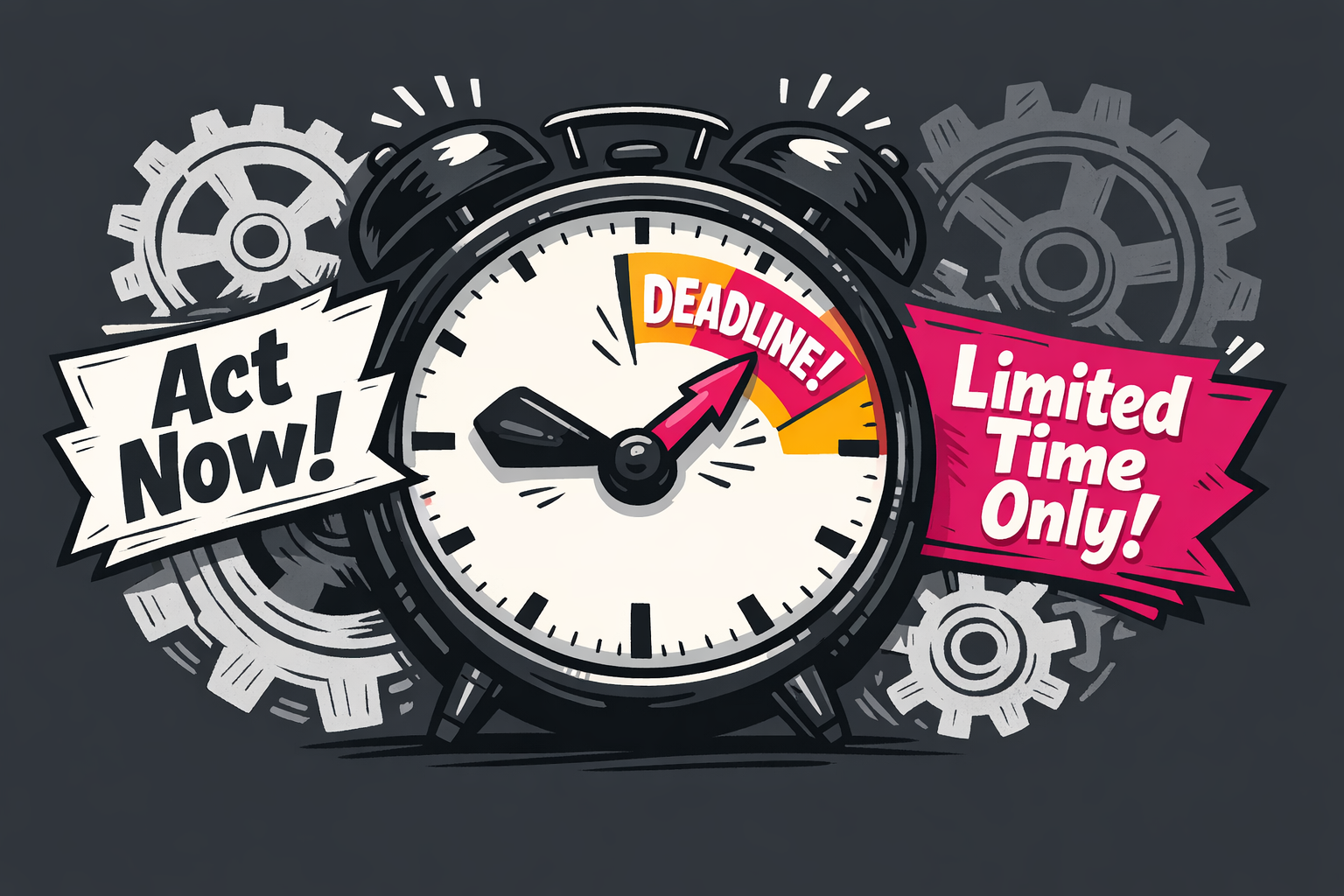
Here’s what changes everything: a deadline. Not a fake one, not a manipulative countdown timer, but an actual time boundary tied to something real. The moment you add that boundary, the psychology flips. Your lead magnet strategy stops being about a permanent fixture gathering dust and starts being about activating actual decision-making.
TL;DR for the Impatient Nugget Seekers
- It’s not the magnet. Your lead magnet isn’t failing because it’s bad. It’s failing because there’s nothing pushing someone to download it today instead of never.
- Urgency isn’t sleazy. It’s how humans actually make decisions. Time boundaries are signals, not manipulation.
- One touchpoint vs four. A time-bounded campaign gets 4+ touchpoints with your audience instead of just one lonely landing page. That changes everything for how to get more lead magnet signups.
- Real deadlines need real reasons. A launch, an event, a limited batch. Fake urgency gets called out, and people remember that.
- Plan the after before the during. The campaign doesn’t end when the magnet gets downloaded. That’s where it starts.
Right, let’s get into why your current approach is costing you leads.
Your lead magnet isn’t broken. The problem is it’s sitting on a permanent page with no reason to act now
I see this constantly. You’ve built a solid lead magnet PDF. The copy is tight. The landing page converts reasonably well. But the downloads trickle. So you panic and rebuild the whole thing.
Here’s what I think you’re missing: your magnet isn’t the problem. The psychology is.
When your lead magnet lives on a permanent page with zero time boundary, you’ve essentially told your visitor “this will be here forever.” And if something will always be available, there’s zero reason to act today. They’ll download it next month. Or next quarter. Or never, because next week they’ll forget the page existed.
You’ve accidentally removed the single most powerful conversion lever available to you: urgency.
Why static lead magnets on your website fail (and it has nothing to do with the PDF)
Most coaches and course creators assume their lead magnet isn’t working because the PDF itself is weak, the landing page copy needs better hooks, the design isn’t professional enough, or the opt-in form has too many fields.
So you tweak, rebuild, test. You might even hire someone. And the downloads still don’t move.
The real issue sits underneath all of that. It’s psychological scarcity. Without a deadline, without a “this ends on Friday” signal, without any reason to believe the offer will change or disappear, your visitor has no logical reason to convert today instead of Tuesday.
This isn’t manipulative. It’s basic human behaviour. We prioritise urgent things over important things. We act when there’s a boundary. Remove the boundary, and you remove the trigger.
Why urgency is not sleazy, and why ignoring it costs you leads
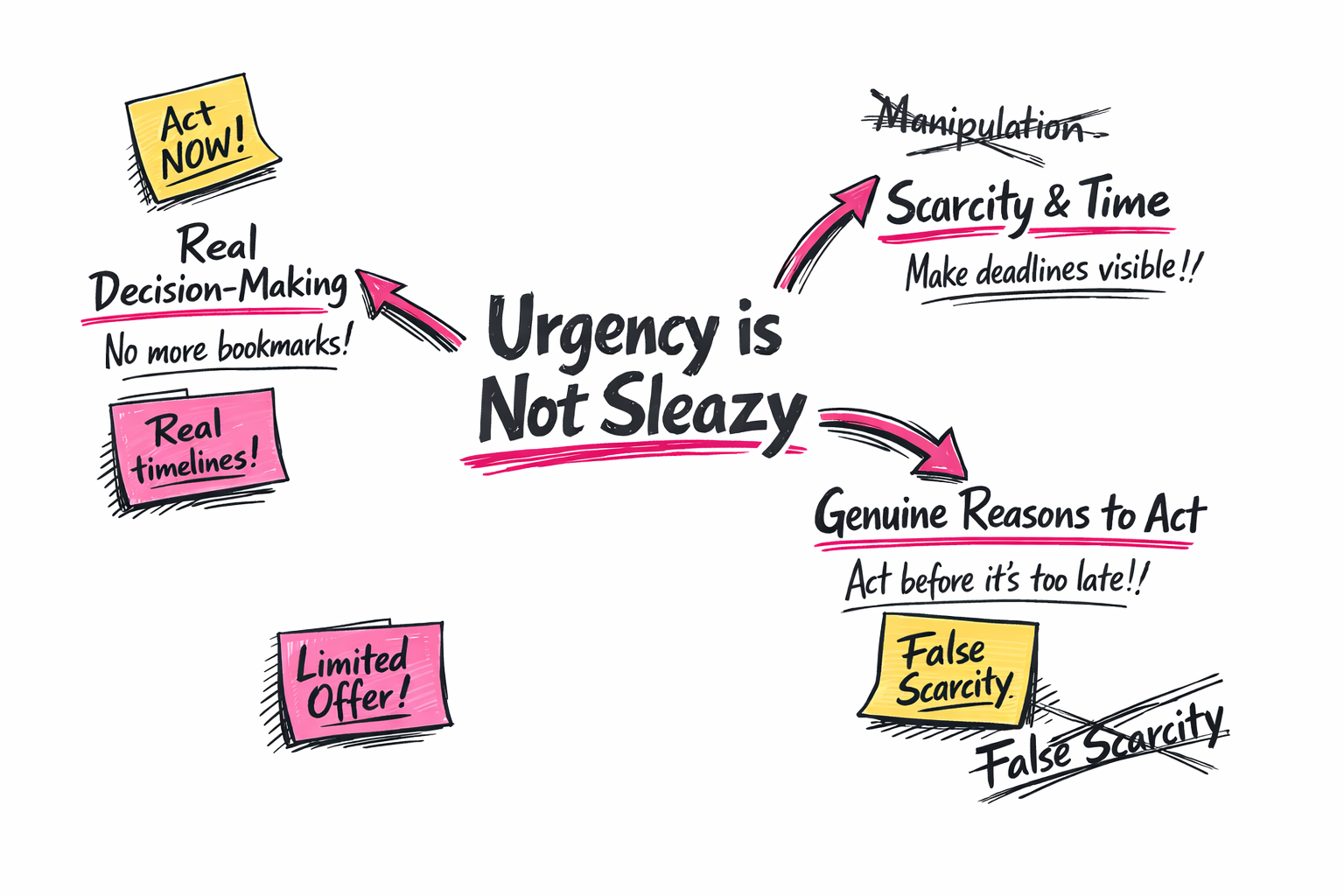
I think there’s real confusion here around what urgency actually is. It’s not manipulation. It’s not pressure. Urgency is a signal that something matters now, and that signal is what makes people move from “that sounds interesting” to “I’m downloading this today.”
When something’s available forever, our brain files it under “I’ll do that later.” Which, let’s be honest, usually means never. That’s not a moral failing on your audience’s part. It’s just how decision-making works.
Scarcity and time activate real decision-making
People don’t download lead magnets in a vacuum. They download them when two things align: they want the thing, and they have a reason to want it today. Without the second part, you’re asking them to make a decision on a permanent, low-stakes basis. And low-stakes decisions get postponed indefinitely.
When you add a boundary (available for 7 days, only during the campaign, exclusively for this cohort) you’re not being manipulative. You’re being honest about how the offer actually works. And you’re activating the part of someone’s brain that makes decisions instead of bookmarks.
Think about your own behaviour. You scroll past content constantly. But when something has a deadline, you stop scrolling. You pay attention. You act. That’s not because you’ve been tricked. It’s because you’ve been given permission to prioritise it.
Making deadlines real instead of invented
You don’t invent false scarcity here. Your campaigns have actual timelines. Your cohorts have actual start dates. Your webinars have actual dates. You’re just making the deadline visible, so people understand why they need to act now instead of later.
Maybe you’re running a live workshop next week and this magnet is the entry point. That’s real. Maybe you’re closing the training video at the end of the month. That’s true. Perhaps you’re launching a new offer in 10 days and this magnet won’t be relevant anymore. That happens.
The moment you put a real time boundary on your lead magnet, the download rate changes. Not because the magnet got better. Because your visitors now have a genuine reason to decide today.
The shift from permanent fixture to time-bounded campaign
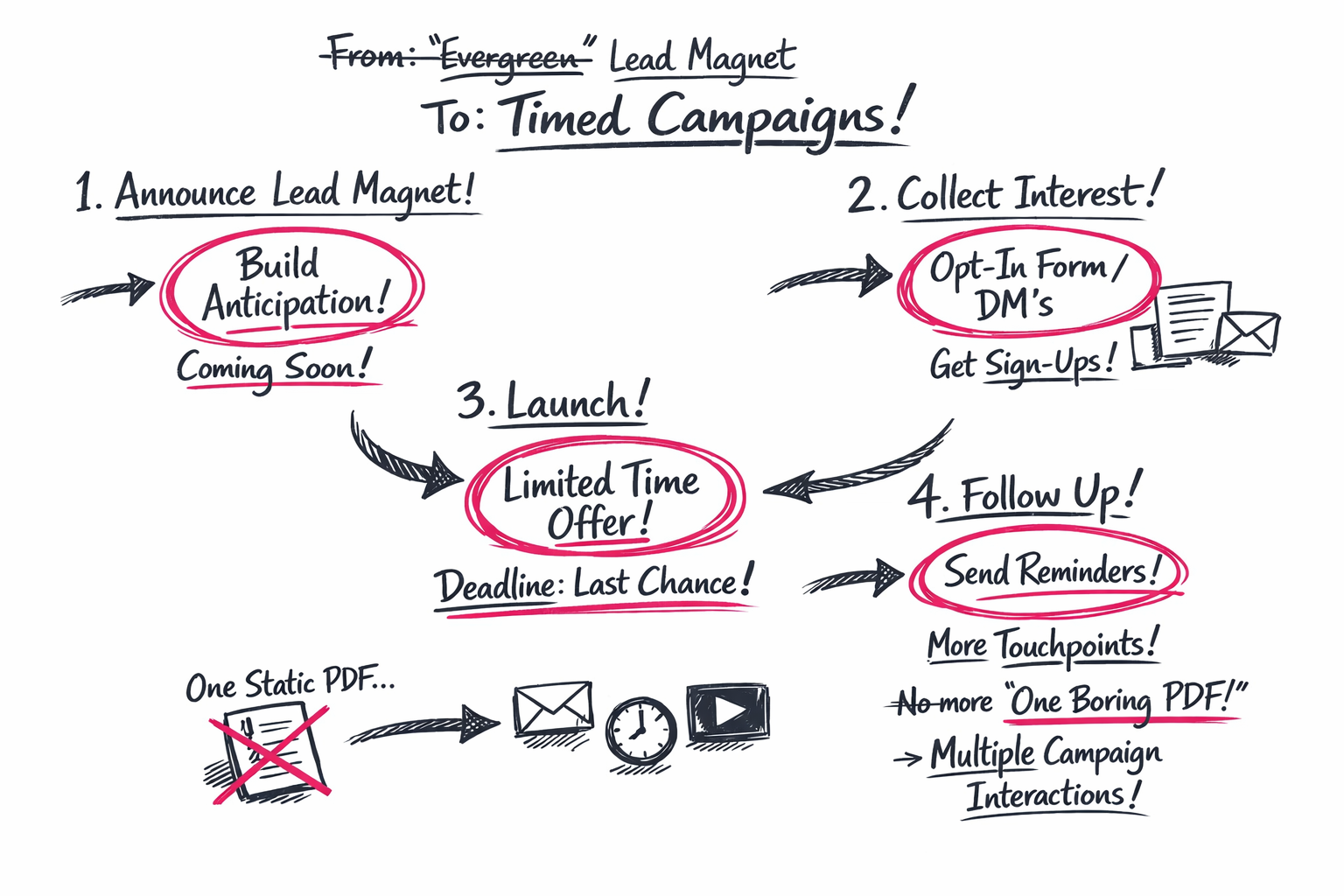
So if urgency is the answer, how do you actually build it into your process? The shift is structural. You stop treating your lead magnet as something you upload once and forget about. You start treating it as a campaign with a beginning, a middle, and an end.
Three structural changes that matter
First, announce what’s coming and build anticipation before the lead magnet even exists. Tell your audience you’re creating something useful specifically for them. A single post or email saying “I’m building X, here’s why it matters to you” does the job.
Second, collect interest before you launch. Create a simple form or DM funnel where people tell you they want it. This serves two purposes: you get data on whether people actually care, and you build a warm audience who’s primed to open your email when you send the resource. They’ve already indicated intent.
Third, set a real deadline and stick to it. “Available for the next 7 days” or “Open until Friday at midnight.” Make it visible on the landing page. Mention it in your emails. The deadline creates urgency, yes, but it also gives you permission to follow up without feeling like a nag.
Why this structure multiplies your signups
A permanent PDF sitting on your website creates one touchpoint: the landing page itself. A time-bounded campaign creates at least four: the announcement, the interest collection, the launch email, and the deadline reminder. More touchpoints mean more chances for your ideal person to catch it at exactly the right moment in their week.
You can automate this entire flow with MailerLite or GoHighLevel. Both platforms let you sequence announcements, tag interested subscribers, and trigger deadline reminders without you lifting a finger after setup. That’s the system part. You do the work once, it runs every time you run the campaign.
I go deeper on structuring the lead magnet itself in How to Turn a Transcript Into a Lead Magnet PDF in 10 Minutes. But the campaign architecture is what actually gets downloads. The magnet’s just the prize. The urgency signal is what makes people act.
What happens after the campaign ends (and why that matters before you launch)
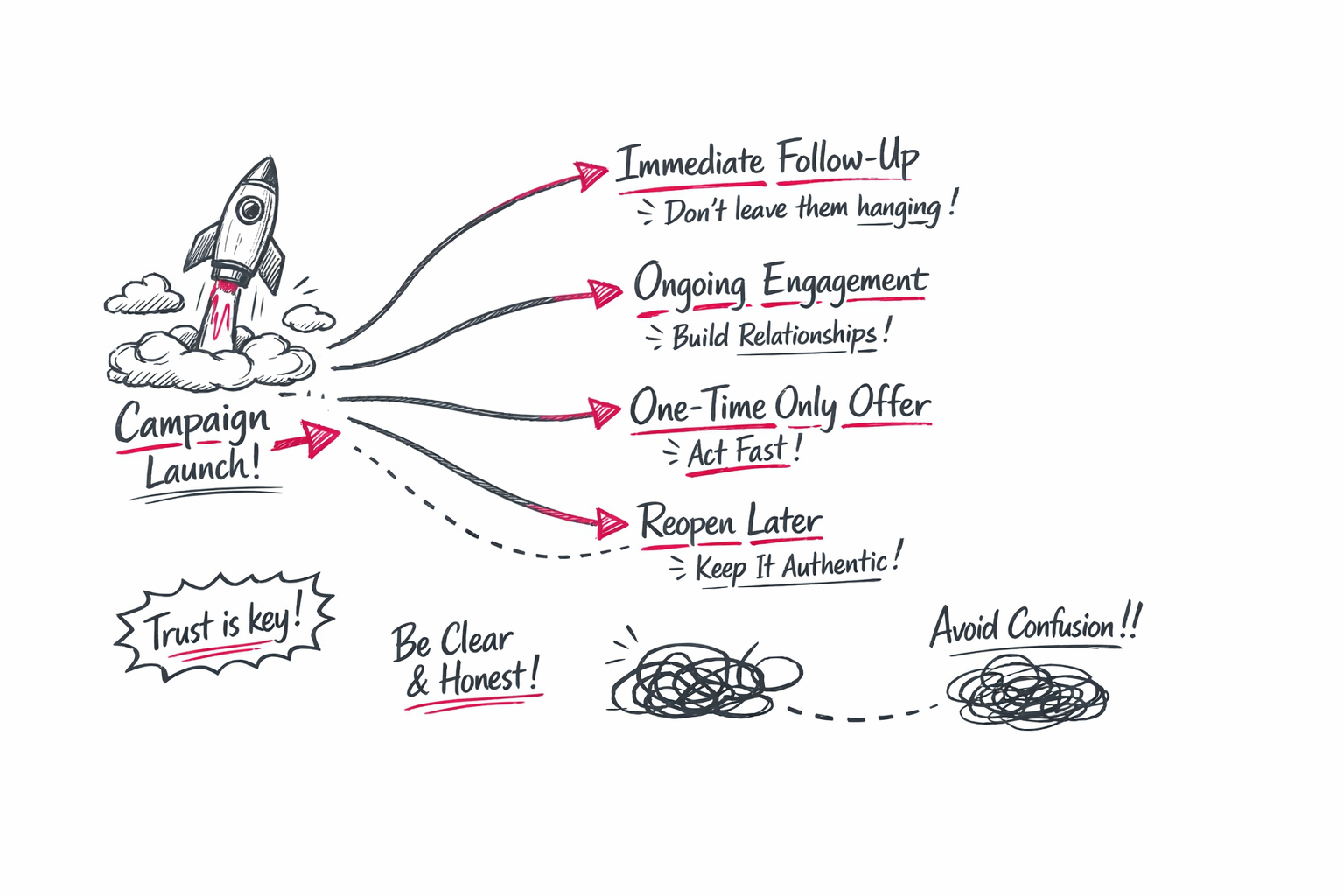
Urgency only works if people know what comes next. I’ve watched people download lead magnets during a launch week, then never hear from anyone again because no one explained what happens on day eight. The magnet disappears. The page goes quiet. And suddenly that sense of scarcity feels like a trick.
That’s the moment you lose trust.
Before you set a deadline, you need to decide: is this magnet one-time only, or does it come back? Will it roll into your next cohort? Archive permanently? Reopen in six months? Be honest about permanence. If people sense you’re creating fake scarcity just to move numbers, they’ll feel manipulated. And manipulated people don’t convert into paying customers.
Get clear on your own model first
I think the biggest mistake is launching without a plan for the magnet’s lifecycle. You set a 48-hour window, it works, emails flood in, then what? Do you have a sequence ready? A welcome offer? A way to keep those people engaged beyond the initial download?
The best campaigns treat the deadline as the start, not the end. The download is permission to begin a conversation. If your follow-up is vague or non-existent, urgency becomes a liability. People will feel rushed, download out of FOMO, then feel resentful when there’s nothing there.
Signal what’s actually happening
On your landing page, make the next step obvious. “Download now before the offer closes Friday at 5pm. Once you download, you’ll get immediate access plus a welcome email with your first steps.” That’s clarity. That’s honest urgency.
Or: “This magnet is always available. Download whenever you’re ready, and you’ll be added to my weekly strategy emails.” That works too. No artificial deadline. Just genuine value and permission to stay connected.
The why behind your deadline matters more than the deadline itself. Is it because you’re running a live workshop and need to know numbers? Because you’re closing applications for a paid programme? Because you’re testing a new lead source before deciding to scale it? Those are real reasons. Lead with them.
People are smarter than we give them credit for. They know the difference between genuine scarcity and manufactured panic. When you’re honest about how the magnet works and what comes next, urgency stops feeling sleazy. It becomes part of a real offer that respects their time. That’s when the downloads actually start.

Related posts you might find helpful: