
TL;DR for the Impatient Nugget Seekers
- Your rambling transcript is better lead magnet material than a perfect prompt. AI slop happens when you ask machines to think instead of process. Feed it something real first.
- “High-quality human input” doesn’t mean TED talk delivery. It means opinions, your actual perspective, the way you talk when you’re not performing. That rawness is what makes it work.
- One-shot prompts produce generic marketingese. Two prompts work: first one builds the skeleton, second one writes copy that sounds like you. The quality difference is substantial.
- Canva Docs handles the design so you don’t have to. Drop in your copy, it auto-formats beautifully. Ten to fifteen minutes and you’ve got a PDF worth sharing.
- Lead magnets don’t need to live forever on your website. Add a seven-day window and the perfectionism pressure disappears. You ship faster, you learn what actually resonates, you iterate from real data.
- The imperfect magnet that shipped beats the perfect one that didn’t. Speed unlocks testing. Testing unlocks learning. Learning unlocks something that actually converts.
You’ve Already Got Your Lead Magnet Sitting in a Transcript
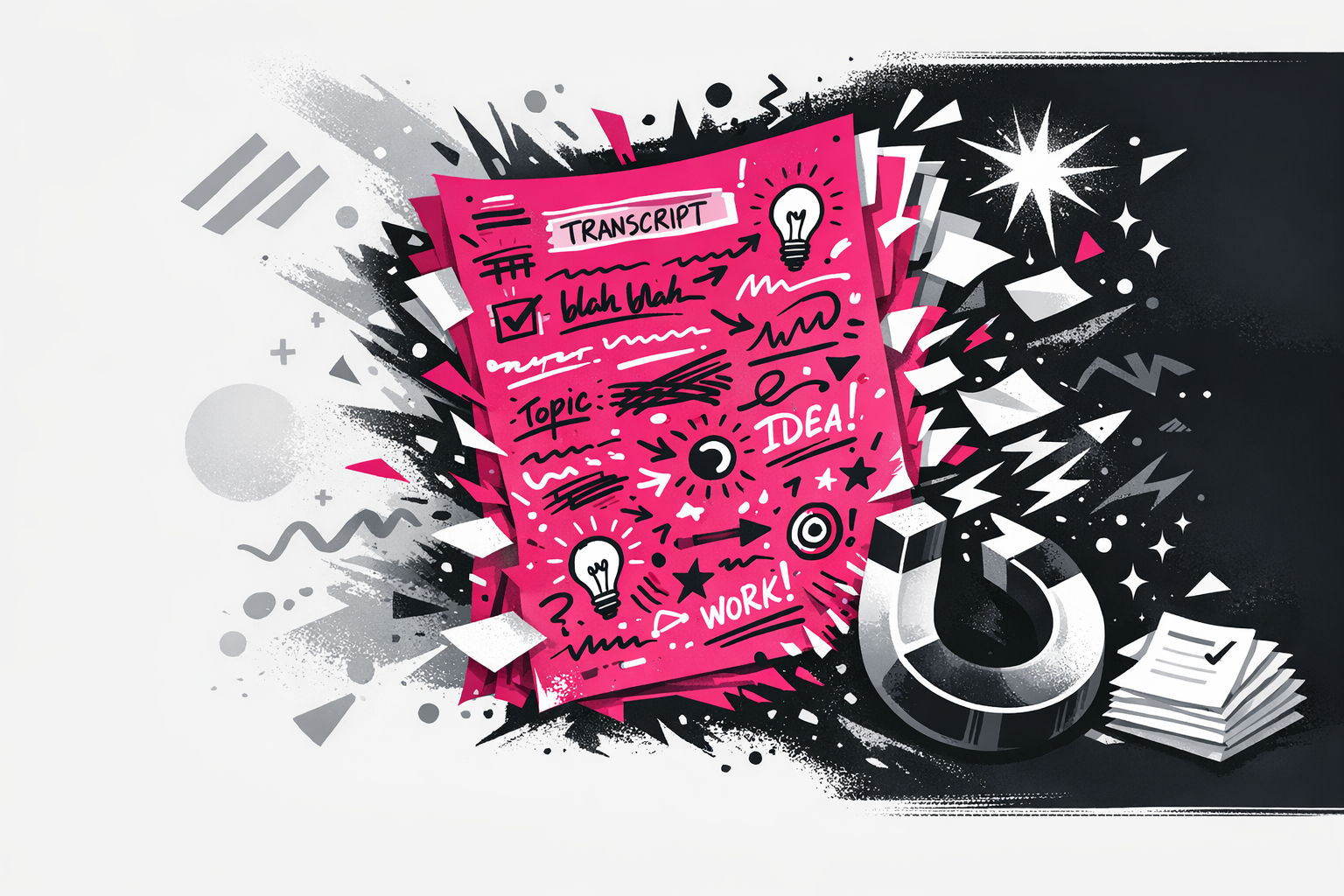
Here’s the thing about AI slop. It’s not actually a problem with AI. The problem is that most people ask AI to think for them instead of feeding it their own brain first. You sit down, fire up ChatGPT, type in a prompt about “create a lead magnet on [topic],” and what you get back is generic, flavourless, indistinguishable from what a hundred other people just generated. That’s not AI’s fault. That’s you asking a machine to produce something from thin air when you haven’t given it anything real to work with. Now flip that completely. You’ve probably got hour-long calls, podcast episodes, training sessions sitting on your hard drive right now. Raw footage of you thinking out loud, talking through your take on something, explaining why you believe what you believe. That transcript is full of human nuance. It’s full of opinion, stance, your actual perspective on something. That’s the opposite of thin air. That’s material with substance already baked in. Most people don’t see their transcripts as assets. They see them as byproducts. Something that sits there once the call’s done, never quite polished enough to repurpose, never quite finished enough to feel ready. So they just stay there. And meanwhile you’re wondering where your next lead magnet is supposed to come from, imagining you need some brilliant new idea, some fresh angle, some concept you haven’t thought of yet. You don’t. You’ve already created it. You just haven’t recognised it.High-Quality Doesn’t Mean Perfect
Here’s where I need to be really clear about what “high-quality human input” actually means. I don’t mean your transcript needs to sound like a TED talk. I don’t mean it has to be polished, grammatically perfect, or delivered with practiced precision. The transcript I use to create lead magnets is rambly as hell. It’s got false starts. I lose my train of thought mid-sentence sometimes. High-quality in this context means it’s very human. It means it’s got your real thinking in it, not a script someone else wrote or a prompt you fed to an AI. When someone reads something pulled from your transcript, they can feel you in it. They can hear your voice, your opinions, the way you actually talk when you’re not trying to sound professional. That rawness is exactly what makes it work.The Real Barrier Isn’t Skill or Creativity
Most people I talk to who aren’t producing lead magnets aren’t stuck because they don’t know how to design something beautiful or they can’t come up with ideas. They’re stuck because they’re perfectionist and they’re waiting. Waiting for the right moment, waiting until they’ve got time to do it properly, waiting until it looks the way they imagine it should look. Meanwhile weeks pass. Months pass sometimes. Here’s what I’d rather you understand: you don’t need to spend hours creating a lead magnet. You can turn a transcript into a PDF that actually works in about ten minutes. The faster you can turn your transcripts into lead magnets, the more you can test. The more you test, the more you learn what your people actually want instead of imagining it. Perfect is the enemy of shipping. And if it’s not shipped, it’s not making you any leads.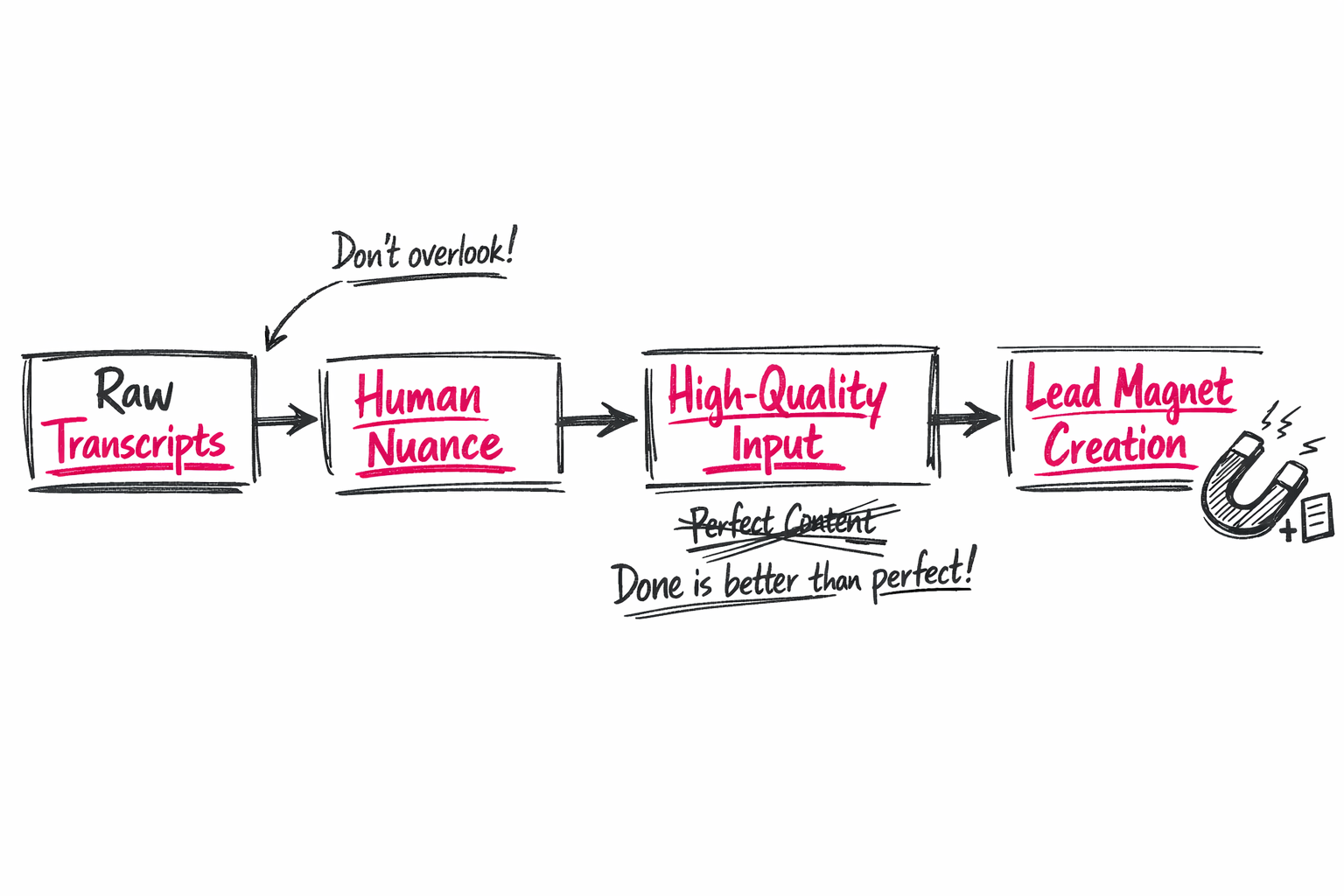
Why Your Rambling, Unpolished Transcript is Better Than a Perfect Prompt
Here’s the honest bit that most AI conversations skip over: the quality of what comes out is almost entirely determined by the quality of what goes in. You can have the most beautifully written prompt in the world, but if it’s asking AI to think instead of to process, you’re already lost. That’s how you get AI slop. Not because the tool is broken, but because you’ve asked it to create something from absolutely nothing. I use AI constantly. All day, probably. But I only use it when it’s amplifying something I’ve already thought through, something I’ve already said out loud, something that came from my brain first. That’s the difference. When you feed AI your actual thinking, it has actual material to work with. It can reflect you back instead of defaulting to generic templates.What Makes a Transcript Real Material
Your transcript doesn’t need to sound like a professional speaker. It doesn’t need to be polished or grammatically perfect. If anything, the rambly bits are where the good stuff lives. When I’m thinking out loud for an hour, I’m not performing for a camera. I’m just talking. That’s exactly the point. High-quality human input doesn’t mean perfect delivery. It means opinions. It means your actual perspective on something, not a script someone else wrote or a prompt you fed to ChatGPT. When someone reads something pulled from your transcript, they should be able to feel you in it. Generic output sounds like everyone else. Your unpolished transcript sounds like you. And that’s non-negotiable when you’re trying to create a lead magnet that actually resonates with your people instead of blending into the noise.How the Transcript Becomes a Lead Magnet PDF in Minutes
Here’s what I think is happening in most people’s heads: they imagine turning a transcript into a lead magnet as this elaborate process. Editing, rewriting, designing, tweaking. That’s why they don’t do it. The mental load feels too big, so it doesn’t happen. But you don’t need to rewrite your transcript from scratch. You’re extracting the strongest thinking from it and formatting it in a way that’s actually useful to someone else. That extraction takes about ten minutes once you know what you’re looking for. You’re looking for the moments where you made a clear point. Where you challenged something. Where you explained your actual take on a problem someone faces. Those sections already have your voice. They just need to be pulled out and arranged.
The Two-Prompt Method to Turn a Transcript Into a Lead Magnet PDF
Here’s the thing: every AI tool can theoretically turn a transcript into a lead magnet in one go. You dump the transcript into a prompt, ask it to create something beautiful and on-brand, and you’re done, right? Wrong. That’s how you get AI slop dressed up as lead magnets. The reason one-shot prompts fail is simple. You’re asking the AI to do two incompatible jobs at once: structure thinking and write persuasive copy. It can’t do both well. It flattens everything into generic marketingese because it’s trying to sound professional while organising your ideas simultaneously. I’ve learned the hard way that breaking this into two distinct prompts produces something genuinely useful. First prompt: create the structure. Second prompt: populate it with real copy. That’s it. Two prompts, not one massive prompt hoping for miracles.Prompt One: Build the Skeleton First
The first prompt’s job is architectural. You’re telling Claude to convert your transcript into a structured outline that captures your voice, expertise, and core insights. You’re not asking for finished copy yet. You’re asking for scaffolding. This prompt needs to be specific about what you want preserved. Tell it to extract your strongest points, identify the frameworks you mentioned, pull out the actionable advice. Instruct it to maintain your tone and perspective, not sanitise it into corporate-friendly nothing. Here’s why this matters for search intent: someone searching “transcript to lead magnet PDF” wants speed and simplicity, but they also want something that doesn’t look like it was generated by a robot. This two-step method delivers both.Prompt Two: Write Copy That Sounds Like You
Once you’ve got your structure locked, the second prompt has one clear instruction: transform this outline into scannable, engaging human content that feels real, not polished marketing fluff. The prompt should tell Claude exactly how you want this to read. Are you direct? Conversational? Do you use short sentences? Do you want it formatted for skimmability? Now that the structure is solid, the AI can focus entirely on capturing your actual communication style instead of inventing one. When I switched to Claude for copy work, the jump in quality was immediate. It handles nuance better. It’s less inclined to default to corporate-speak. It’s more precise when you give it constraints.From AI Output to Finished Lead Magnet
Once you’ve got that polished copy, you’re going to drop it into Canva Docs. Not Canva templates, not a design tool that requires you to understand layout and typography. Canva Docs specifically, because they handle the visual heavy lifting without you needing design skills. You paste your copy, it auto-formats beautifully, you add your header image or logo, and you’ve got something worth sharing. The whole process takes roughly ten to fifteen minutes. You’re not wrestling with margins or fonts or whether your colours clash. You’re moving from transcript to downloadable PDF without friction. If you want the exact prompts I use for this, Turn A Transcript Into a Beautiful Lead Magnet Using Claude AI walks you through the whole thing step by step.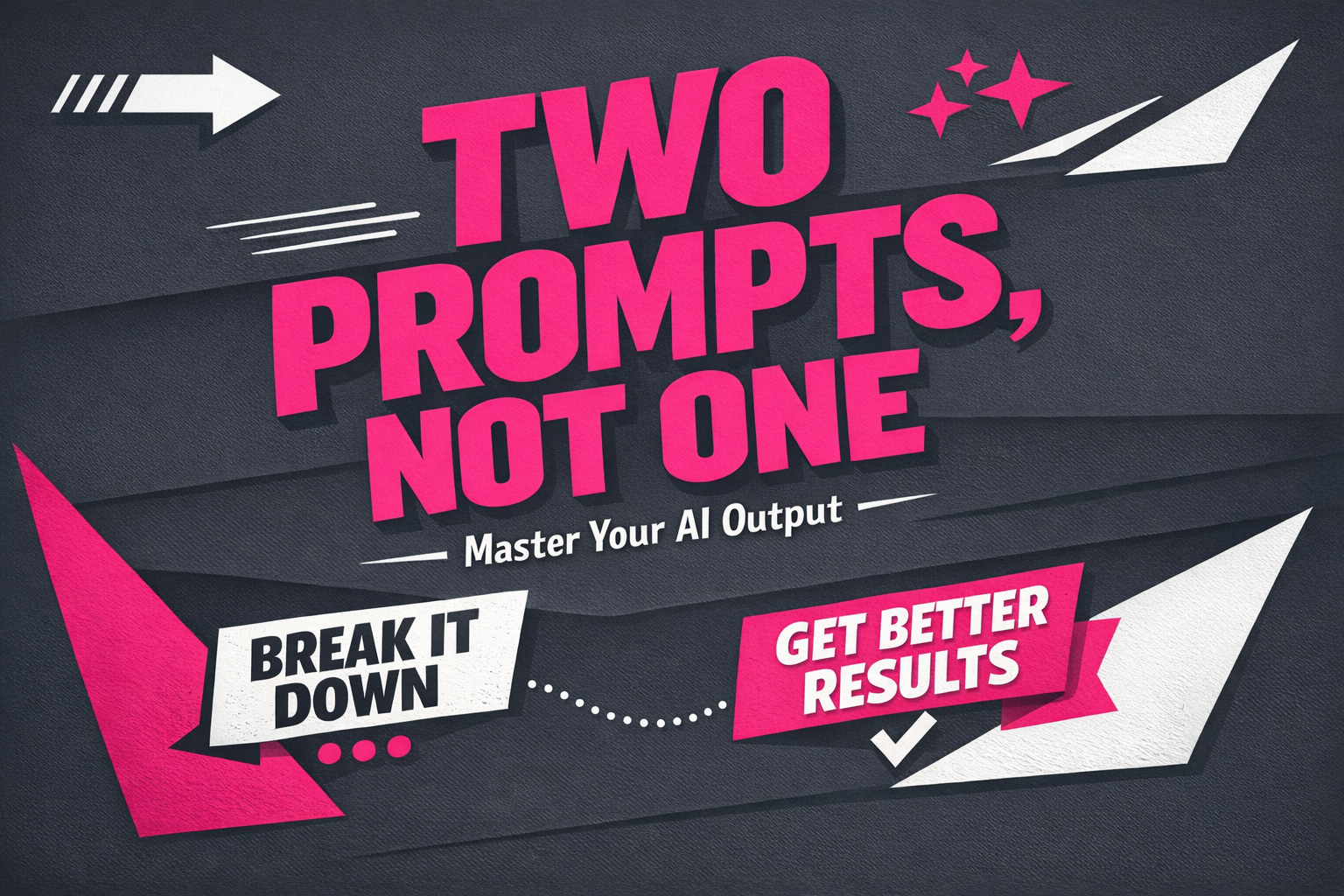
The Lead Magnet Needs Urgency, Not Permanence
Here’s what I see most business owners do: they create a lead magnet, upload it to their website, and then leave it there forever. It sits on a static landing page, available to download at any time, collecting dust. The conversion rate flatlines. They assume people just aren’t interested, so they move on. The actual problem isn’t the magnet. It’s the lack of urgency. PDF lead magnets genuinely do get downloaded at the pace of snails when they’re just sitting there indefinitely. There’s no reason to act now. Your brain does the calculus: “I can download it whenever I want, so I won’t bother right now.” And then later becomes never. But the moment you introduce a time boundary, the psychology shifts. Suddenly there’s a reason to move. You’re not building a permanent resource. You’re creating a moment of opportunity.How to Create Urgency Without Overthinking It
The beauty of this approach is that you don’t need a funnel, a landing page, or a complicated email sequence. You need social media and two clear steps. Step one: You announce that you’re making something. You don’t wait until it’s finished. You tell your audience “I’m currently putting together a step-by-step guide on how to do X with Y. Who wants it?” You ask them to comment, to signal interest. Then you let that post sit and simmer whilst people respond. This is the genius part: you’re validating demand before you’ve even finished building. And you’re creating a list of engaged people who’ve already said yes. Step two happens once you’ve actually created the lead magnet: you come back to those comments, you send them a DM, and you tell them “Awesome, it’s ready. Drop me your email and I’ll send it over.” You can even add the urgency angle here, telling them you’re only sharing it for the next three days. The whole thing takes ten to fifteen minutes of execution. No design handover delays. No waiting for the “perfect” moment to launch. If you want a framework for testing lead magnets this way without needing funnels or landing pages, The Build-As-You-Fly Lead Magnet Test breaks it all down.Why Permanence Is Actually the Enemy
There’s this unspoken belief in online business that everything you create should have a long shelf life. That you should build evergreen assets, things that work for you indefinitely, that compound over time. Lead magnets aren’t one of them. When you treat a lead magnet as a permanent fixture, you create pressure on yourself to make it perfect. You overthink the topic, you agonise over the design, you try to make it appeal to everyone. And then you ship it slowly, or not at all. But if you’re building it with a seven-day window, the pressure dissolves. It doesn’t need to be flawless. It needs to be useful, honest, and shipped.
The Speed Unlocks Everything Else
Here’s what most people get wrong about lead magnets: they think they need to be perfect before they ship them. They sit with a half-finished PDF for weeks, tweaking the design, second-guessing the angle, waiting for the stars to align. Meanwhile, nothing’s happening. No emails are being collected. The speed of turning a transcript into a lead magnet PDF isn’t just about convenience. It’s the entire philosophy. Fast creation means you can actually test. Testing means you learn what your audience wants instead of guessing. That’s the real unlock. When you can turn a transcript into a lead magnet in 10 minutes, you remove the friction between “I have an idea” and “this is live.” You’re not waiting for a designer. You’re not faffing about with fancy funnel builders. You’re creating something real, shipping it, and watching what happens.Why imperfect beats delayed every single time
I’ve watched this pattern repeat across my own business and in conversations with other creators: the PDF that took three hours to perfect converts about the same as the one that took fifteen minutes. Sometimes it converts worse, because the rushed one had more personality and less overthinking baked in. The thing that actually matters isn’t pixel-perfect design or copy that’s been workshopped to death. It’s permission. Your audience wants permission to take action, to move forward, to try something. A lead magnet gives them that permission. Speed also means you’re not burning out before you’ve even started testing. Lead magnet creation should feel easy enough that you’d genuinely do it regularly, not like a quarterly project that drains you dry.The permission to ship and iterate
This is where the build-as-you-fly philosophy really lives. You create something, you ship it, you see what happens. Then you make it better based on what you actually learned, not what you imagined people would want. Once your transcript converts into a lead magnet and people start signing up, you’ve got the data to improve it next time. You know which angles resonated. You know which types of transcripts pull better. You know because you shipped something and paid attention to what happened. The faster you can create lead magnets from transcripts, the more you can test. The more you test, the faster you learn. And that cycle is where you actually build something that works.What happens after they sign up
Once someone gives you their email address, the lead magnet’s job is done. You’ve got them. What you do next is the automation part, and that’s where email platforms like Mailerlite or CRM systems like GoHighLevel come in. They handle the delivery, the follow-up sequences, the long-term nurture. But the creation side? That’s you and Claude and Canva and about 15 minutes of focused work. No gatekeepers, no waiting. Just ship it, learn from it, move forward.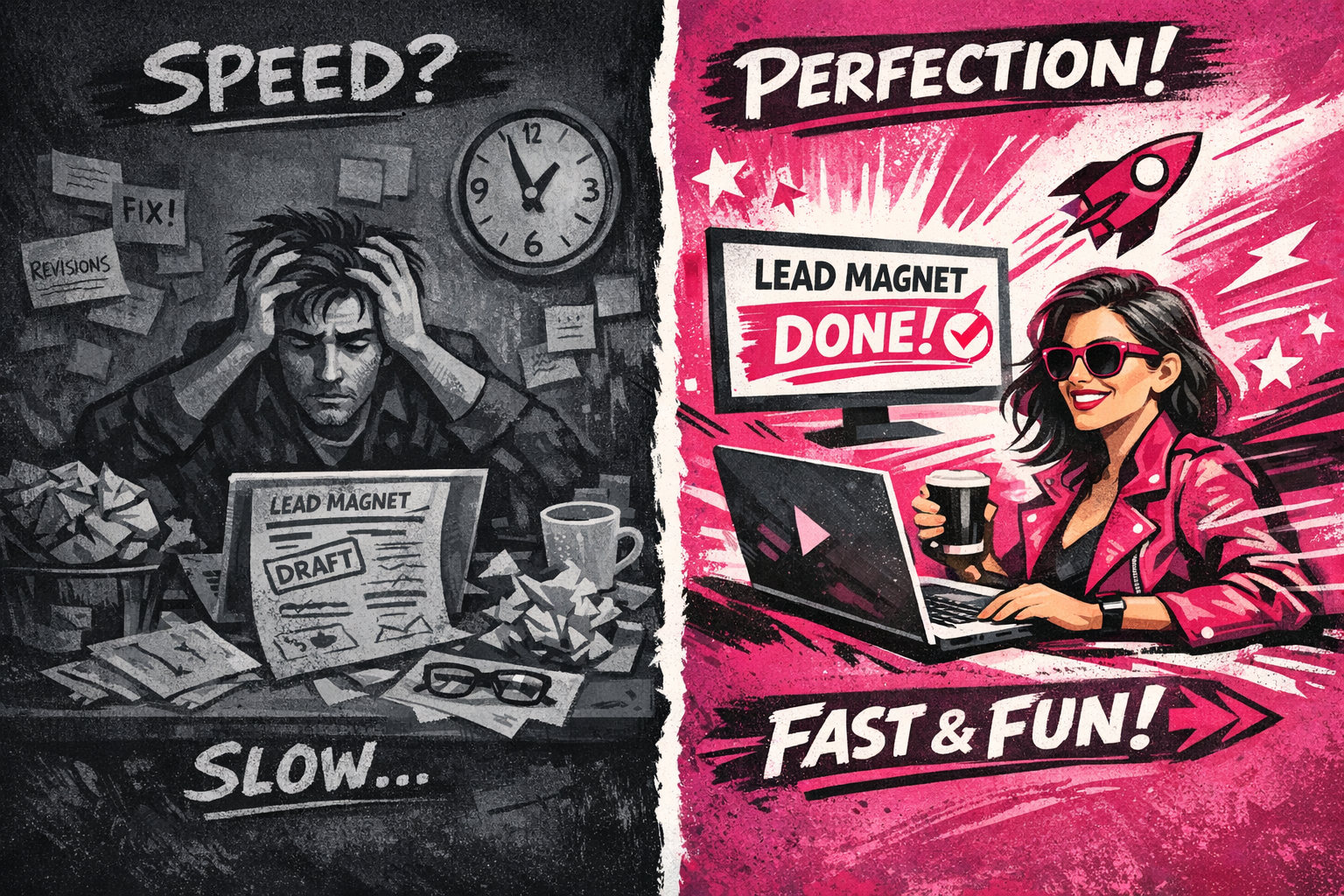
Related posts you might find helpful: