
Introduction
I see this all the time. You create a free PDF. You promote it. The link is live. Then the downloads barely move.
It is frustrating, especially when you know you are not slacking. The asset exists. The effort is there. Yet nothing much happens. In my experience, why no one is downloading your free PDF is almost never one single issue, which is exactly why it feels so hard to fix.
I want to walk through the real reasons this happens. The psychology of urgency. How people treat free resources. What actually happens after someone downloads. Whether the format itself is working against you. And whether the platform you are using is quietly adding friction you cannot see.
You do not need a dramatic overhaul. I think most of the time you need a clearer lens. My aim here is simple: look at the right things, in the right order, and decide what is actually worth fixing first.
Key Takeaways
- If there is no reason to download your PDF right now, most people will not. I find that real, honest urgency tied to an actual deadline or event gives people a reason to act. Without that, they mean to come back later. They rarely do.
- Download numbers can be misleading. A click tells you almost nothing about what happens next. If your follow-up metrics are flat, the issue may not be the download rate at all, even though that is the easiest thing to blame.
- A simple email sequence after the download matters more than most people realise. Three clear emails that welcome, remind, and nudge will usually do more than endlessly tweaking your landing page copy.
- PDFs are the default lead magnet. Default does not mean effective. If people are not engaging, I think it is worth asking whether the format actually suits how your audience prefers to learn or consume information.
- The platform delivering your freebie shapes the experience more than you might think. Small bits of friction at this stage lose people who were already interested. It is subtle, but it matters.
If any of this sounds familiar, the detail in the article will help you make sense of what is really going on and decide what to adjust first.
Could Urgency Be the Key to More PDF Downloads?
If you’ve been wondering why no one is downloading your free PDF, the answer might be far less dramatic than you think: there’s no reason to grab it right now. And if there’s no reason to act now, most people simply won’t.
We all like to think we’ll “do it later”. We won’t. Later is where good intentions go to die.
The Psychology Behind Why Urgency Works
Urgency taps into something very human — the fear of missing out. When something feels available forever, our brain quietly files it under “I’ll look at that later”, and later never comes. That’s not your audience being lazy or flaky. It’s just how people are wired.
FOMO isn’t a gimmick. It’s one of the most reliable drivers in marketing because it makes a decision feel real and time-sensitive. The second something feels finite — a limited window, a closing offer, a disappearing bonus — the perceived value goes up. Not because the thing changed, but because the context did.
And yes, you can use that same principle to increase PDF downloads with urgency without turning into a shouty online marketer. It’s not about pressure. It’s about clarity.
How to Use Scarcity Without It Feeling Fake
The key is that the urgency has to be genuine. Manufactured drama is obvious, and people are sharp. A few honest ways to build it in:
- Tie the download to a live workshop or event window that is actually closing
- Offer a bonus resource alongside the PDF for a limited time only
- Position the PDF as a companion to a promotion or season that has a natural end date
- Use language like “grab this before we update it” if a new version is genuinely coming
- Add a countdown to your landing page when a real deadline exists
None of this requires theatrics. It just requires you to build a real reason to act now into how you launch and promote the thing.
Getting more PDF downloads with scarcity works best when the scarcity is honest and clearly explained. Vague urgency — “get it while you can!” with zero context — feels hollow. And if I’m honest, it often makes me roll my eyes a bit. Savvy readers will ignore it, or worse, they’ll quietly lose trust.
Be specific about what’s changing and when.
If you want to improve PDF download rates on your next promotion, try adding one urgency element. Just one. See what shifts. You don’t need a complicated funnel or a flashy tool. You need a clear deadline and a reason it matters. Give people a nudge — not a shove — and make that reason genuinely worth acting on.
Are Download Numbers Lying About Engagement?
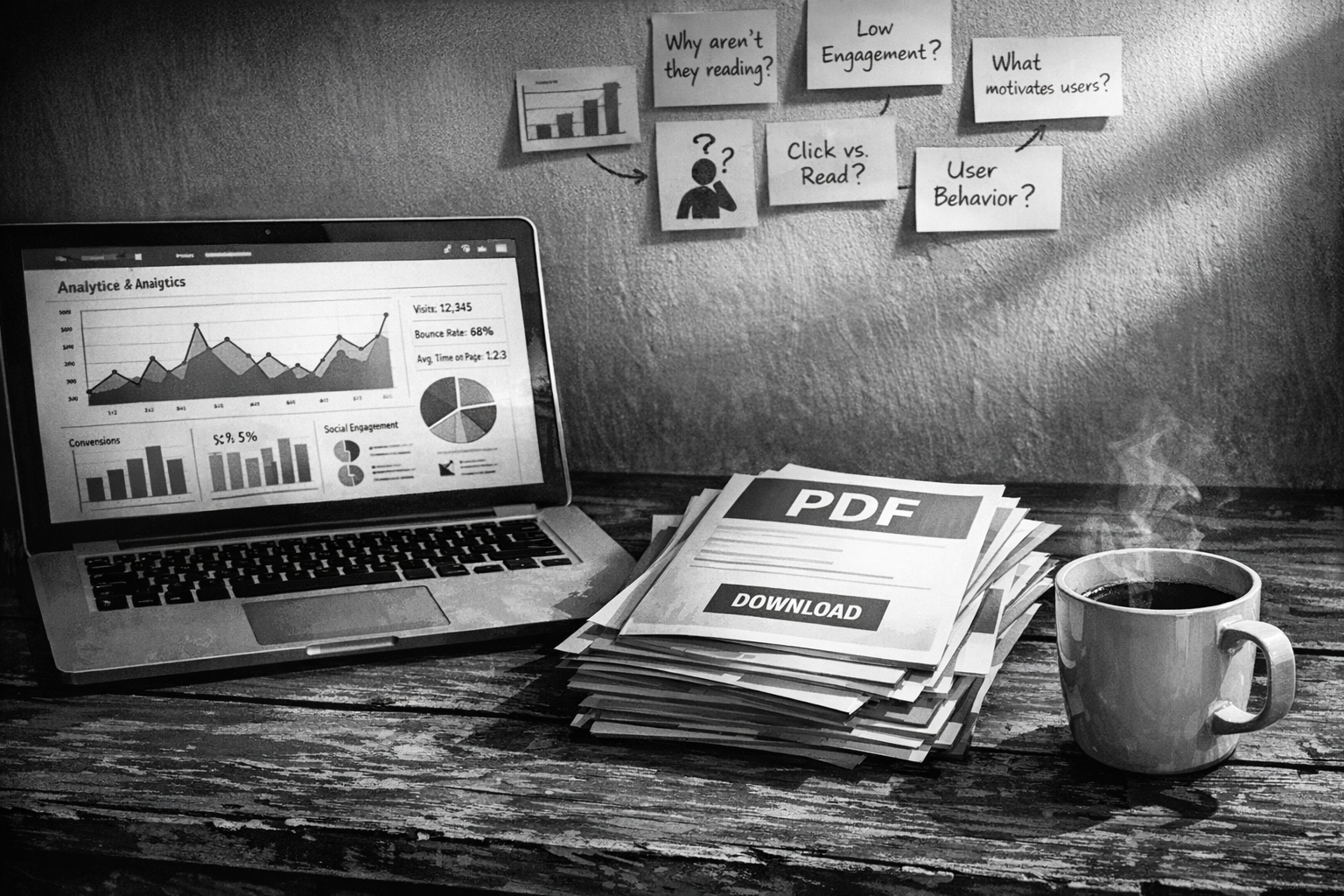
Here’s the bit we don’t always say out loud when we’re wondering why no one’s downloading the free PDF: sometimes they are downloading it — they’re just not reading it. A high download number can feel like proof that it’s working. Like, great, people want it. But downloads and actual engagement? Not the same thing. And treating them as if they are is one of the fastest ways to end up with a PDF that never gets opened twice, shared, or acted on.
The gap between clicking and actually reading
Behavioural research shows there’s a big drop-off between the moment someone downloads a free resource and the moment they meaningfully engage with it. They click. It lands in their downloads folder. And that’s often where the story ends. Not because they’re rude or flaky — it’s just what people do when something costs nothing, requires no commitment, and doesn’t give them a strong reason to open it right now.
I think this is important to sit with before you rush to “fix” your download rate. If you optimise purely for clicks, you’ll probably get them. More buttons pressed. More files saved. And possibly more PDFs quietly ageing on more desktops. But a bigger number isn’t the point. The point is a document someone actually opens, reads, and finds useful enough to remember you by.
Lead magnets, generally, have what I’d call a “free pile” problem. Because there’s no friction in getting them, there’s no urgency to use them. They get lumped in with the other five guides someone meant to read. It often feels productive at the point of download… and then life gets in the way. A lot of business owners see solid download figures while their follow-up email open rates, replies, or conversions tell a much flatter story.
Download metrics are a starting point. They’re not a verdict. If you want to know whether your PDF is actually doing its job, you have to look past the click and pay attention to what happens next. What do people do in the days after they download it? That’s where the real signal is. And honestly, that’s where most lead magnet strategies quietly unravel.
The Real Work: Using Email Follow-Ups Effectively
If you’ve been staring at your stats wondering why no one’s downloading your free PDF, you’ve probably already fiddled with the landing page, rewritten the headline three times, and briefly considered whether the whole thing’s just… broken. I get it. But here’s the bit people skip: the download is the start of the conversation, not the finish line.
Why Your Email Sequence Matters More Than the PDF Itself
Most people don’t act the first time they see your freebie. They mean to. They really do. Then life happens, the tab gets closed, Slack pings, and by Tuesday morning it’s gone. A solid email sequence is what brings them back. That’s where the real work of improving PDF download rates actually sits.
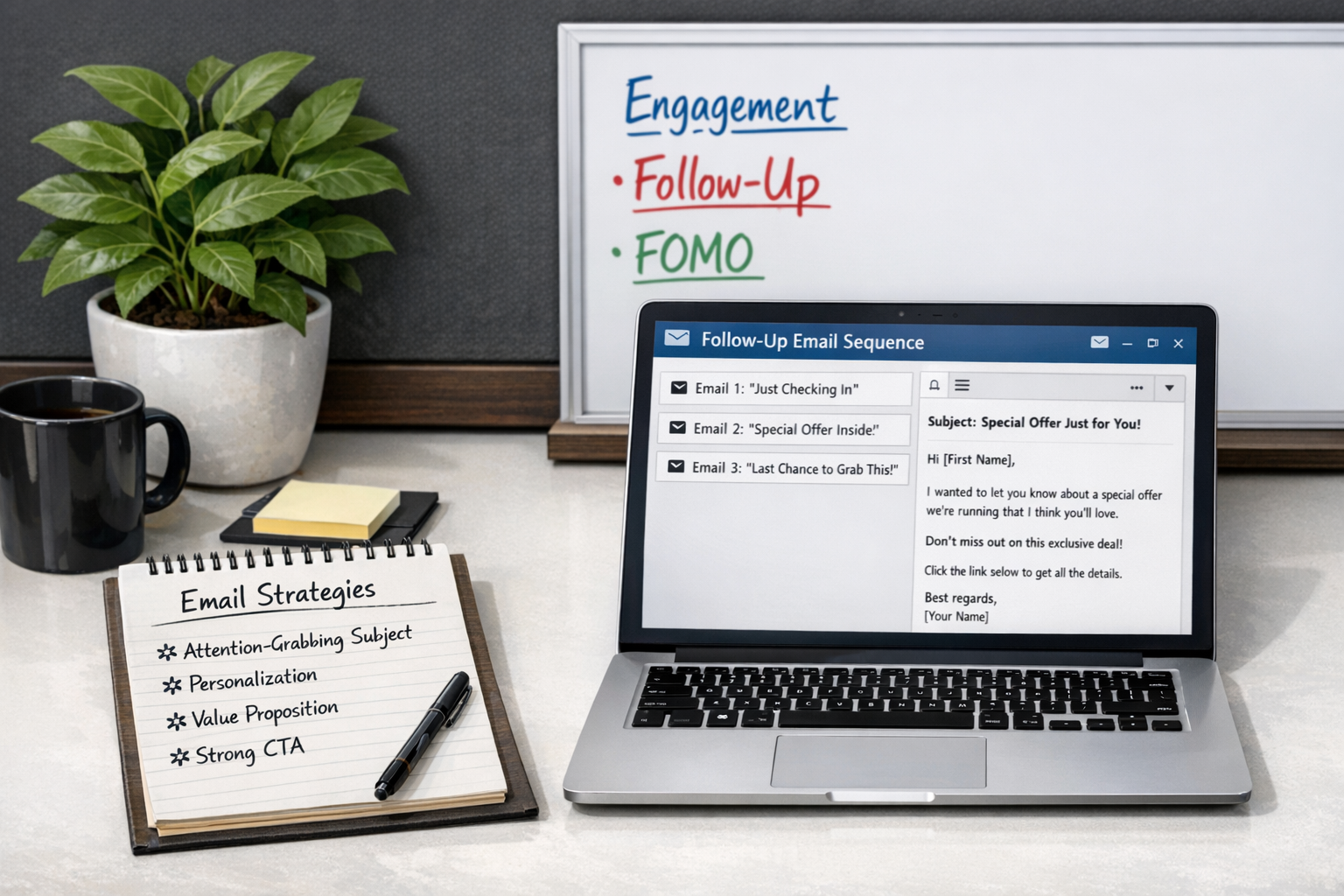
This isn’t about hammering people with reminders. It’s about staying present. Useful. Relevant. Nudging them towards the next step without making it weird. Often, a simple three-email sequence — welcome them properly, remind them what’s inside, then give them a clear nudge with a real benefit — will boost PDF downloads with FOMO far more than another homepage redesign ever will. It’s not flashy. It just works.
Here’s what a basic follow-up sequence can do for you:
- Remind subscribers why they signed up in the first place
- Reinforce the specific problem your PDF solves
- Create a sense of relevance and light urgency without being pushy
- Surface social proof or results naturally within the copy
- Open the door to a next step, whether that’s a reply, a purchase, or a conversation
Tone matters more than people think. So many follow-up emails read like they’ve been approved by a legal department — stiff, formal, oddly distant. It’s unnecessary. Write the way you’d actually speak to someone you genuinely want to help. Clear. Human. No performance.
On the practical side, you need a tool that runs the sequence without you needing an IT qualification. Using something like AWeber means your PDF can be delivered automatically the second someone signs up, followed by a simple pre-written sequence that keeps the conversation going. It’s been around for years, it’s reliable, and it gives you enough automation to support genuine urgency — limited windows, bonus reminders, follow-ups — without dragging you into complicated workflow builders that eat your entire afternoon. It’s not the shiniest option, and that’s partly the point. If you want follow-up handled cleanly and consistently, it does the job without becoming a project.
Quick reality check though: no platform fixes weak copy. If your emails are vague, self-congratulatory, or thin on real value, automation just helps you send forgettable messages faster. The sequence is the vehicle. Your words are still driving. If they’re not strong, nothing moves.
Using scarcity and urgency through email can absolutely increase PDF downloads — but it has to feel earned. Mention a limited-time bonus. Flag that a related offer is closing. Point out that most people who actually use the guide see a shift. Fine. Genuine. What doesn’t work is fake countdown timers that mysteriously reset every hour. People aren’t daft.
The bottom line is simple: a PDF sitting unopened in someone’s inbox isn’t serving them and it’s not serving you. A thoughtful email sequence changes that. And honestly? It’s one of the most practical, high-leverage fixes you can make right now.
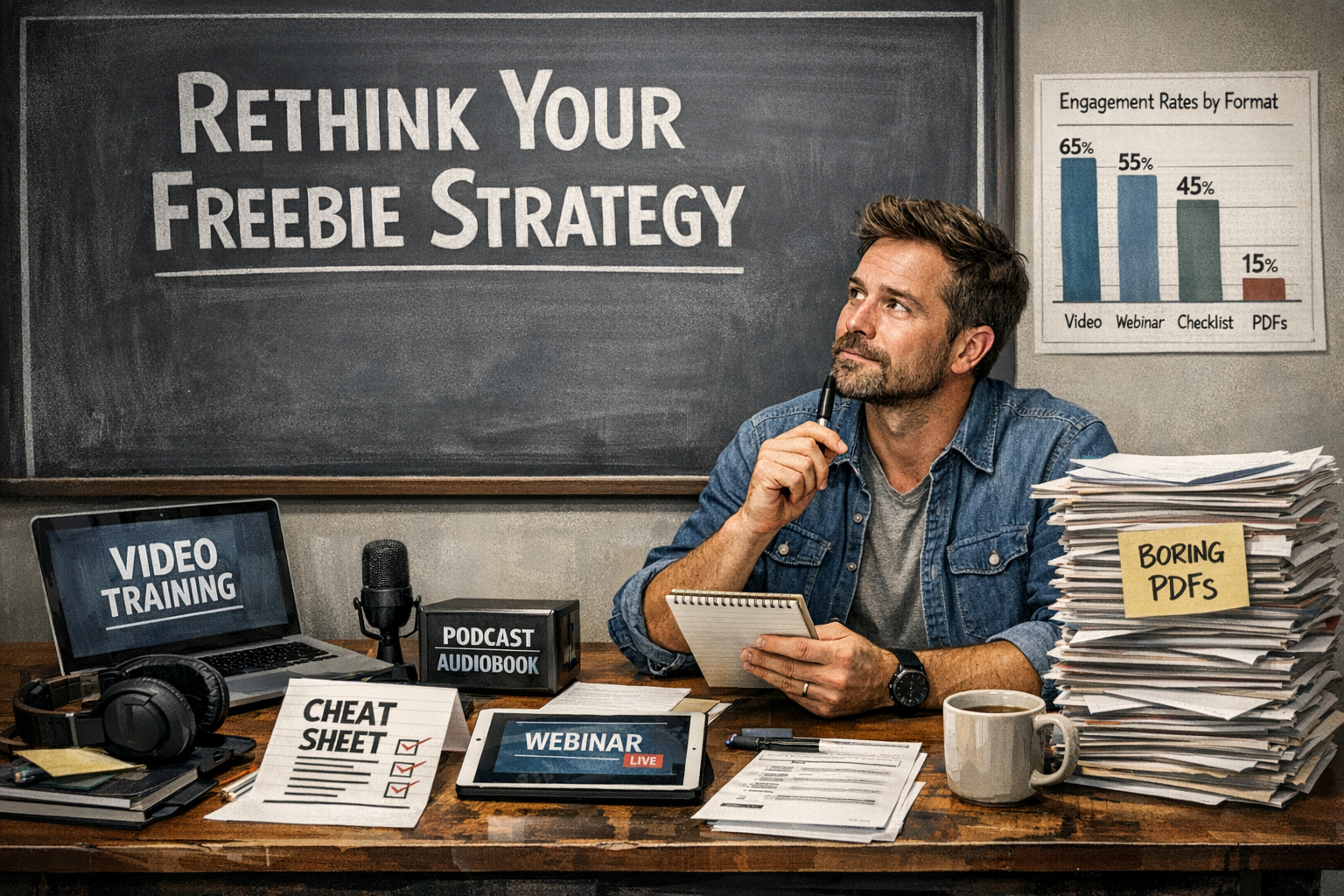
Rethink Your Freebie Strategy
If you’ve been wondering why no one is downloading your free PDF, the honest answer might sting a bit: it’s probably not the promotion, the design, or even the landing page copy. It might just be the format.
PDFs have been the default lead magnet for years. But default doesn’t mean effective. And I think a lot of business owners are still building their entire list-growth strategy around something their audience will open once, skim while half-distracted, and then promptly forget about.
Why PDFs Underperform More Than Most People Admit
The problem with PDFs isn’t that they’re useless — it’s that they ask a lot up front. You’re basically saying: download this, go and find it in your downloads folder, remember it exists, sit down at some point and work through it by yourself. That’s friction on top of friction.
When PDFs aren’t being downloaded, it often comes down to one thing: low perceived immediacy. There’s no urgency. No interaction. No clear moment where someone actually feels the value land. Now compare that to a short video, a quiz, a calculator, even a simple email course delivered over a few days through a platform built for it, like AWeber. You can probably see why those tend to pull stronger engagement. It feels lighter. Quicker. More now.
Research backs this up, by the way. Interactive or multi-step lead magnets — assessments, email sequences, on-demand workshops — usually see higher completion rates than static documents. The value feels more active. More personal. More like something you’re part of, rather than something you save for later and quietly ignore.
That doesn’t mean you need to bin every PDF you’ve ever created. I’m not anti-PDF on principle. But it is worth asking whether your freebie is actually the best vehicle for what you’re trying to teach. If your goal is to improve PDF download rates, the smartest move might not be layering on FOMO or scarcity. It might be questioning whether a PDF is the right tool in the first place.
Here are some alternative formats worth considering:
- Email courses — deliver value in small doses over days, building habit and trust
- Quizzes or assessments — interactive, personalised, and naturally shareable
- Short video trainings — higher perceived value, easier to consume on mobile
- Templates or swipe files — tangible, immediately usable, often feel more “done for you”
- Calculators or tools — solve a specific problem in real time
None of these are magic fixes. They all have trade-offs. An email course takes time to set up. A quiz needs proper thinking-through or it just feels gimmicky. A video needs clarity and structure. So no, this isn’t about chasing shiny objects.
The principle is simpler than that: lead magnet effectiveness isn’t just about the topic. It’s about how easy you make it for someone to actually receive the value.
Before you start tweaking copy or bolting urgency onto your PDF, step back. Be honest. Is this format genuinely serving the goal — or are you clinging to it because it’s what everyone’s always done? Sometimes the more rebellious move is just choosing the tool that works harder from the start.
Selecting the Right Platform for Your Audience
If you’re wondering why no one is downloading your free PDF, the platform you’re using to host and deliver it might be a bigger issue than you realise. I see this all the time. It’s one of the most common reasons PDFs don’t get downloaded — the experience of getting it just isn’t smooth enough. And people don’t work for free things. They just don’t. If it feels even slightly awkward, they’re gone.
Where You Host It Changes Everything
The platform you choose decides how much friction sits between your audience and the download. A clunky delivery process, a weird sign-up journey, or a tool that wasn’t really built for this in the first place can quietly wreck your PDF download rates efforts before they’ve even started. It’s rarely about needing something “more advanced”. It’s about whether the whole thing feels easy. Normal. Trustworthy.
Platforms like Gumroad and ConvertKit are worth considering because they’re actually designed for this kind of thing. Gumroad lets you offer a PDF directly, with a simple checkout that still works even if it’s free. ConvertKit ties the delivery to your email list, which means they get the file and you get a way to follow up — and if you want the download to lead anywhere, that part matters.
Matching the Platform to Your Audience
The right choice depends on who you’re trying to reach and what you want to happen next. If your audience already buys digital products regularly, Gumroad will feel familiar. If you’re building an email list and want to nurture people over time, ConvertKit probably makes more sense.
And this is the bit people skip. They pick whatever tool they’ve heard of, or whatever someone on Instagram recommended, without really thinking about how their audience behaves. Different audiences click, sign up and buy in different ways. That’s just how it is.
Here are a few honest questions to help you decide:
- Does this platform match how your audience already behaves online?
- Does it make the download feel effortless, or does it add unnecessary steps?
- Does it give you a way to follow up, or does the relationship end at the download?
- Is the delivery reliable, or could technical hiccups be putting people off?
If what you really want is straightforward delivery plus simple, reliable follow-up without turning it into a tech stack experiment, AWeber tends to be a sensible middle ground. It’s built for list-building and sequences first, which means your PDF goes out automatically and your nurture emails just… run. That won’t fix a weak offer, but it will remove a lot of unnecessary friction.
No platform is perfect. And switching tools won’t magically fix a weak offer. But if the delivery experience is adding friction, you’re losing people who were already interested. That’s not a complicated marketing problem. It’s a practical one. And practical problems are usually fixable.

Sources:
The Psychology Behind Fear of Missing Out (Journal of Behavioral Economics, 2023)
Related posts you might find helpful: