

I see a lot of people stall on welcome sequences because they feel bigger than they are. It often turns into a perfection project that never quite gets finished.
Setting Up a 5-Email Welcome Sequence in Just 30 Minutes
Putting off a welcome sequence usually isn’t about time. It’s about it feeling heavy. You open a draft, tweak a line, second-guess the tone, then close it again. I think the real worry is sending something that feels unfinished or not quite right.
Here’s the part that matters. Your subscribers do not need a perfect sequence. They need to hear from you. A simple 5-email welcome sequence you can set up in 30 minutes will do far more for your business than a flawless sequence that stays in drafts.
This article walks through a straightforward framework for creating a welcome sequence that builds trust, gives people something useful, and points them towards a sensible next step. It does this without eating your week or turning into another stressful thing on your list. It’s practical, a bit imperfect, and that’s often why it works.
Key Takeaways
- Focus on function over perfection: I keep each email doing one clear job. Deliver the lead magnet. Offer a quick win. Share a bit of context about you. Show proof. Then extend an invitation. One purpose per email is enough.
- Use the power of timing: Spacing matters more than clever wording. I like immediately, then 1 day later, 2 days later, 3 days later, and 5 days later. It keeps momentum without crowding someone’s inbox.
- Add a personal touch: A rough 60-second video of you talking to subscribers often builds trust faster than polished copy. It doesn’t need to be slick. It just needs to be you.
- Offer a low-pressure next step: I end the sequence with something lighter than a discovery call. A voice note exchange or a simple reply to a specific question usually feels easier and more human.
If you stop overthinking and sit down with a timer, 30 minutes is often enough to get this done. It won’t be perfect. It will be sent. And that’s what actually moves things forward.
How to Write a 5-Email Welcome Sequence in Under 30 Minutes
Welcome sequences don’t need to be a big thing. Or a clever thing. The idea that you need hours, flowcharts, and twelve rewrites is… honestly, nonsense. A solid 5-email welcome sequence you can set up in 30 minutes does exist. This is it.
The shift is simple: stop chasing “perfect” and focus on doing the job. Welcoming people in, showing them what you’re about, and giving them somewhere clear to go next. That’s it. No endless drafting. No overthinking every line.
The Quick Framework That Works
The reason most welcome sequences drag on forever is that people start writing without knowing what each email is meant to do. Every email should have one job. One. Anything more and it gets muddy fast.
Here’s the framework. It’s boring in the best possible way:
- Email 1: The Welcome & Delivery – Send immediately. Give them what you promised. Tell them what to expect.
- Email 2: The Quick Win – Send 1 day later. Something useful they can do in under 5 minutes.
- Email 3: The Story – Send 2 days later. Why you do what you do. Just enough to build trust.
- Email 4: The Showcase – Send 3 days later. One case study or testimonial. No pile-on.
- Email 5: The Invitation – Send 5 days later. One clear next step (buy, book, or keep consuming your stuff).
At this point, most of the thinking is already done. You’re not inventing a strategy. You’re filling in gaps. That’s why this is quick.
Writing Each Email Quickly
When you’re writing automated welcome emails, clarity beats clever every time. I usually suggest setting a 5-minute timer per email. It sounds restrictive, but that’s the point. It stops the spiralling and keeps you honest about what actually matters.
The welcome email is simple: say thanks, deliver the thing, explain what’s coming next. No dramatic set-up. The quick win email should be genuinely helpful, but small. If it feels almost too simple, you’re probably doing it right.
The story email doesn’t need your full backstory or a cinematic arc. Just the moment that explains why this work matters to you. Often that’s enough. For the showcase email, one solid proof point does the job. You don’t need a parade of results.
The final invitation email? One call to action. Please don’t stack them. If you’re asking people to choose between five things, they’ll choose none.
This kind of email funnel keeps the order right: relationship first, selling second. Set a 5-minute timer for each message and you’ll be done fast enough to wonder why this ever felt hard. And maybe you’ll still have a couple of minutes left to actually set the automation, which feels… efficient, for once.

Why a simple email welcome sequence is more powerful than perfect
Here’s the freeing bit: your subscribers don’t need brilliance, they need you. A welcome sequence that actually exists will beat the “perfect” one sitting half-written in your drafts every single time. I’m firmly on the side of a 5‑email sequence you can knock out in about 30 minutes, not something you lose weeks to by obsessing over every line.
The window of opportunity is smaller than you think
Welcome emails regularly hit open rates of 80–90%. That’s wildly higher than your normal campaigns will ever manage. It’s a tiny, precious window where people are genuinely paying attention. And somehow, this is the bit so many business owners waste by overthinking, overwriting, or just… not sending anything.
Because the truth is, most subscribers don’t fully read your lead magnet. That beautifully written 30‑page PDF? They probably skim a few pages. Maybe. Your welcome emails are what actually start building trust, not the download they signed up for.
It often feels like perfectionism sneaks in wearing sensible clothes here. Tweaking subject lines. Fiddling with button colours. Endless “just one more tweak”. Meanwhile new subscribers hear absolutely nothing from you. By the time something “perfect” finally goes out, that initial interest has cooled off.
Here’s what genuinely matters in a simple welcome sequence:
- That it exists and goes out straight after someone subscribes
- That it sounds like a real person wrote it (not AI or a lifeless template)
- That it gives value beyond repeating the lead magnet
- That it sets clear expectations about how and when you’ll show up
- That it invites some kind of engagement or reply
MailerLite, ConvertKit, Flodesk — they all make this stuff pretty easy now. The tech isn’t the problem. We are. Or rather, our need to get everything just right before we press go.
When it comes to email, consistency beats perfection every time. A rough‑around‑the‑edges welcome sequence you set up today will do far more for your business than a masterpiece you might finish “one day”. You can always tweak and improve once it’s live. That’s allowed.
So let’s agree on this: give yourself 30 minutes and create the 5‑part welcome sequence. Not polished. Just real. Human. Sent. Because an imperfect email that reaches inboxes is infinitely more powerful than a perfect one that never does.
What Each of Your 5 Emails Should Actually Do
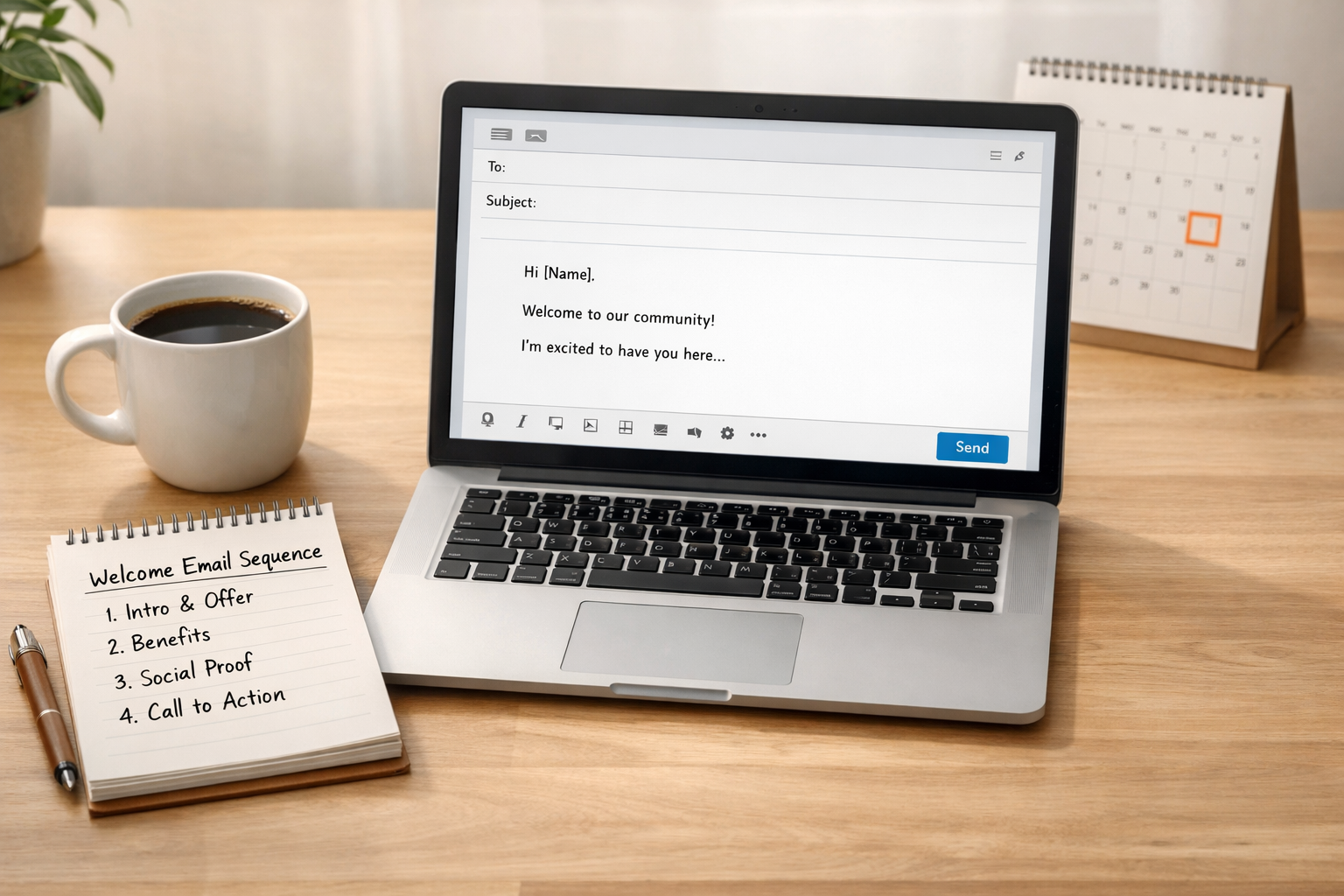
Let’s get practical about your 5‑email welcome sequence — the one you can genuinely set up in about 30 minutes. No fluff. No clever tricks. Just clear jobs for each email so you’re building trust instead of waffle. I’m interested in what actually works here, not what sounds impressive in a strategy doc.
Email 1: Deliver What You Promised
Your first email has exactly one job. One.
Deliver the lead magnet.
Immediately. No delays, no scene‑setting, no “while you’re here” extras. And definitely no selling. Thank them for signing up, give them clear access to what they asked for, and tell them what’s coming next. That’s it. Anything else just gets in the way.
Email 2: The Human Introduction
This is where you stop being “some business” and start sounding like an actual person.
Keep it short and real. Who you are, why you do this work, maybe one detail that makes you feel human rather than polished. Nothing dramatic. A 60‑second Loom or quick phone video can work well here if you’re comfortable — seeing your face and hearing your voice often does more than a perfectly written email.
Email 3: Deliver a Quick Win
Now you earn your place in their inbox.
Give them something useful they can act on straight away. Not a full lesson. Just one helpful thing. For example:
- A tip they can use in five minutes
- A common mistake people keep making (and how to fix it)
- A simple example that shows a clear shift
- A small framework or checklist they can apply immediately
The point isn’t depth. It’s momentum.
Email 4: Acknowledge Their Reality
This is usually where it clicks.
You’re not teaching here so much as noticing. Describe a specific challenge they’re likely dealing with — the kind that makes them pause and think, “yes, that’s exactly it.” It often feels less flashy than the other emails, but it matters. This is how you show you understand their world, not just your solution.
Email 5: Extend a Natural Invitation
Only now do you invite them to take a next step.
Keep it calm. No urgency tricks. No big sales energy. Just a clear option that makes sense based on what you’ve already talked about — a conversation, a closer look, a resource that solves the problem you’ve been circling. If it’s right for them, they’ll take it.
What makes this welcome sequence work isn’t fancy automation or beautifully crafted copy. It’s the order. Delivery. Connection. Value. Understanding. Invitation. That progression does most of the work for you, even if you’re new to email marketing.
Keep each email short. One purpose. One clear action. That’s what keeps this five‑part sequence manageable to write — and actually useful for the person reading it.

Stop waiting on perfect copy. Here’s the fastest way to write it.
The best 5-email welcome sequence you can set up in 30 minutes isn’t going to win copywriting awards. And honestly? That’s fine. Your subscribers aren’t sitting there analyzing your sentence structure. They’re deciding, pretty quickly, whether this is worth their time and whether they trust you. That’s it.
Perfectionism is usually the thing slowing people down here. Not skill. Not strategy. Just overthinking. So let’s talk about how to put together a simple welcome email sequence that does its job without you disappearing into a Google Doc for three days.
Focus on function before phrasing
Start by being clear on what each email actually needs to do. Not how clever it sounds. Not how impressive it feels. Just its job.
- Email 1: Welcome + set expectations + deliver immediate value
- Email 2: Solve one small problem they have right now
- Email 3: Share your story/perspective (why they should listen to you)
- Email 4: Address a common objection or misconception
- Email 5: Invite deeper engagement (call to action)
Write like you’re explaining something to a friend who asked for help. That’s usually the right level. The more you overthink your email writing—whether you’re a coach or running any kind of business—the stiffer it gets.
And I know this tends to sound almost too simple, but when I look at welcome emails that work, they’re rarely polished. They’re clear. They sound human. They don’t try so hard.
Forget cleverness, focus on clarity
Your subject lines don’t need flair. They need to tell the truth. “Your [Product] Welcome Guide” will almost always beat “Prepare to have your mind blown!” because it tells people exactly what they’re opening. No confusion, no disappointment.
If you’re wondering how to write a 5-part welcome email series that converts, this is usually where people get stuck. They chase creativity instead of understanding that clarity wins, basically every time.
Also, you don’t need to sound like a professional copywriter if that isn’t how you talk. In fact, trying to usually backfires. The automated welcome emails that actually build trust sound like they came from a real person, not a marketing department. Slightly imperfect copy that sounds like you tends to land far better than technically perfect copy that could belong to anyone.
Write to one person, not a list
When you’re creating your email funnel, stop thinking about “subscribers” as a group. Picture one person. They’re sitting across from you. They’re interested, but cautious.
What would they need to hear next?
What might they be unsure about?
What’s the thing stopping them from fully trusting you yet?
Templates can help with structure, but they often fall apart when they flatten your voice. If your emails start sounding generic, that’s usually why. Instead, stick to this structure:
- Open with “you” statements that show you get where they are
- Share one insight or solution they can use immediately
- End with a question or simple next step
If you keep it this clean, you really can write all five emails in under an hour. Not because you rushed, but because you didn’t overcomplicate it. Your welcome sequence isn’t there to prove how talented you are with words. It’s there to build trust. Everything else is secondary.

Put a face to the name: why adding a lo-fi video works
When you’re creating a 5-email welcome sequence you can set up in 30 minutes, there’s one thing that shifts it from “fine, I guess” to actually memorable: showing your face. Your real face. Not a polished production. Just you, talking to the person who just joined your list.
Why video beats text-only emails almost every time
We’re wired to trust faces faster than words. That’s just how brains work. And in a sea of long, text-heavy marketing emails, a real human showing up on screen cuts through in a way paragraphs never quite manage. It often feels like research is constantly confirming this too: welcome emails designed to build trust tend to perform better when there’s video involved.
What’s interesting is that the scruffiness is actually the point. A 60-second phone video where you introduce yourself calmly and clearly will usually land better than an expensive, glossy brand video. It quietly says: I’m a person. Not a system. Not a funnel pretending to care.
In a 5-part welcome sequence, I’d put this video in Email #2. By then, they’ve opened the first email, they’ve shown a bit of interest, and now they’re probably wondering who’s actually behind these words. That’s the moment to show up.
Here’s what that simple lo-fi video needs to include:
- A warm hello (use their name if your system can do that)
- A short intro to who you are and why you do this work
- Clear expectations for what’s coming in the next few emails
- A direct invitation to reply with a question or a thought
Yes, tools like Loom make this easy. But honestly, your phone camera is more than enough. What matters is that people can connect your words to a face and a voice. That’s when a quick welcome sequence stops feeling generic.
This isn’t about “performing”. It’s about being recognizable. You’re laying the groundwork for a relationship, not auditioning. It takes minutes to add, but it makes the rest of the emails feel warmer, clearer, and easier to trust.

End it with something easier than a discovery call
When you’re finalising a 5‑email welcome sequence you can knock out in 30 minutes, it helps to pause before shoving people straight into a sales call. I’d resist that urge. Most people who’ve just joined your list aren’t in the headspace for a 45‑minute conversation yet — even if, in theory, it would be useful.
Instead, think about a CTA that feels almost… obvious. Low effort. A next step that doesn’t feel like falling off a cliff. The strongest welcome sequences I see don’t force anything early. They let trust build in small, normal ways.
The problem with traditional discovery calls
Discovery calls turned into the default “next step” around 2019, and honestly, they’re a bit draining all round. Everyone’s calendar is already full, and being asked to book a call days after joining a list can feel abrupt. Slightly awkward. Not generous.
What tends to work better is a middle ground — something between “I’m just reading your emails” and “I’m committing to a proper conversation.” That’s where the anti‑discovery call idea comes in.
Here are some low‑pressure follow‑ups you can use in the final email of a simple welcome sequence:
- A voice note exchange (Voxer or WhatsApp)
- A short Loom request where they talk through their situation (five minutes, max)
- A text‑based micro‑consult via whatever messaging platform you actually like using
- A “send me your biggest question” invite, with a promised personal reply
- A small paid offer under £50 that solves one specific thing, quickly
The point here isn’t cleverness. It’s respect. These options let people respond in their own time, without the weird calendar ping‑pong or the weight of a formal call.
When you’re shaping this final touchpoint in your automated welcome emails, it helps to come from a “helpful guide” place rather than an eager closer place. “I’m here if you want to take this further” tends to land better than “book a call this week.”
Your welcome sequence isn’t there to close deals. It’s there to open a door. The most effective quick welcome email sequences don’t end with pressure — they end with a sense of space.
And yes, when you offer easier next steps like this, more people follow through. The conversations that happen tend to be better too. Less obligation. More genuine interest.

Sources:
“Omnisend Email Marketing Report” (Omnisend, 2024)