
Introduction
Creating unique content for every platform, every week, drains energy fast. I see the pressure everywhere. Posting bespoke content on Instagram, LinkedIn, TikTok, YouTube, a blog, and a newsletter while running a business is how burnout sneaks in. Most business owners struggle with weekly content because they are chasing an impossible standard.
This article pushes back on the idea that every platform needs something completely different. I lay out a more sustainable approach. I show how to work smarter with content pillars, multistreaming, and AI tools so I can create once and distribute everywhere without losing quality or connection.
Key Takeaways
- I stop trying to be everywhere, every day. I focus on one solid King piece of content each week, like a video or podcast, then repurpose it across platforms.
- I use multistreaming tools like Restream or StreamYard to broadcast live content to multiple platforms at the same time and cut the workload fast.
- I let AI tools handle the repurposing heavy lifting by creating platform-specific clips, captions, and formats from the main content piece.
- I redefine success away from posting frequency and towards simplicity, reach, recovery time, impact, and sustainability.
- The real drain is not posting. It is the constant decision-making. I build a system simple enough to explain in one sentence and so easy it feels almost boring to maintain.
I am done with the content cycle that leads to burnout. I focus on building a system that works for real people with full lives beyond the internet.
Stop trying to be everywhere, every day: why custom posts for every platform are a trap
Let’s be honest. Creating unique content for every platform, every day, is a fast track to burnout. If you’re asking how to create weekly content for every platform without burning out, the first step is admitting the expectation is broken. The idea that you need bespoke posts for Instagram, LinkedIn, TikTok, YouTube, your blog and your newsletter, while also running an actual business, is not realistic. Full stop.
I see business owners wiped out by this all the time. And no, you’re not failing if you can’t keep up. You’re just responding normally to an impossible standard.
The myth of platform-specific everything
This pressure usually comes from well-meaning but dodgy advice. You’re told every platform has its own “language” and rules, so everything must be created from scratch.
Yes, platforms have quirks. But the basics don’t change. People want something useful, clear and genuine, wherever they find you.
When you bend over backwards to make everything “platform-specific”, you often end up with thin content that says very little. Spread too thin, burnout is inevitable.
The smarter approach: content pillars
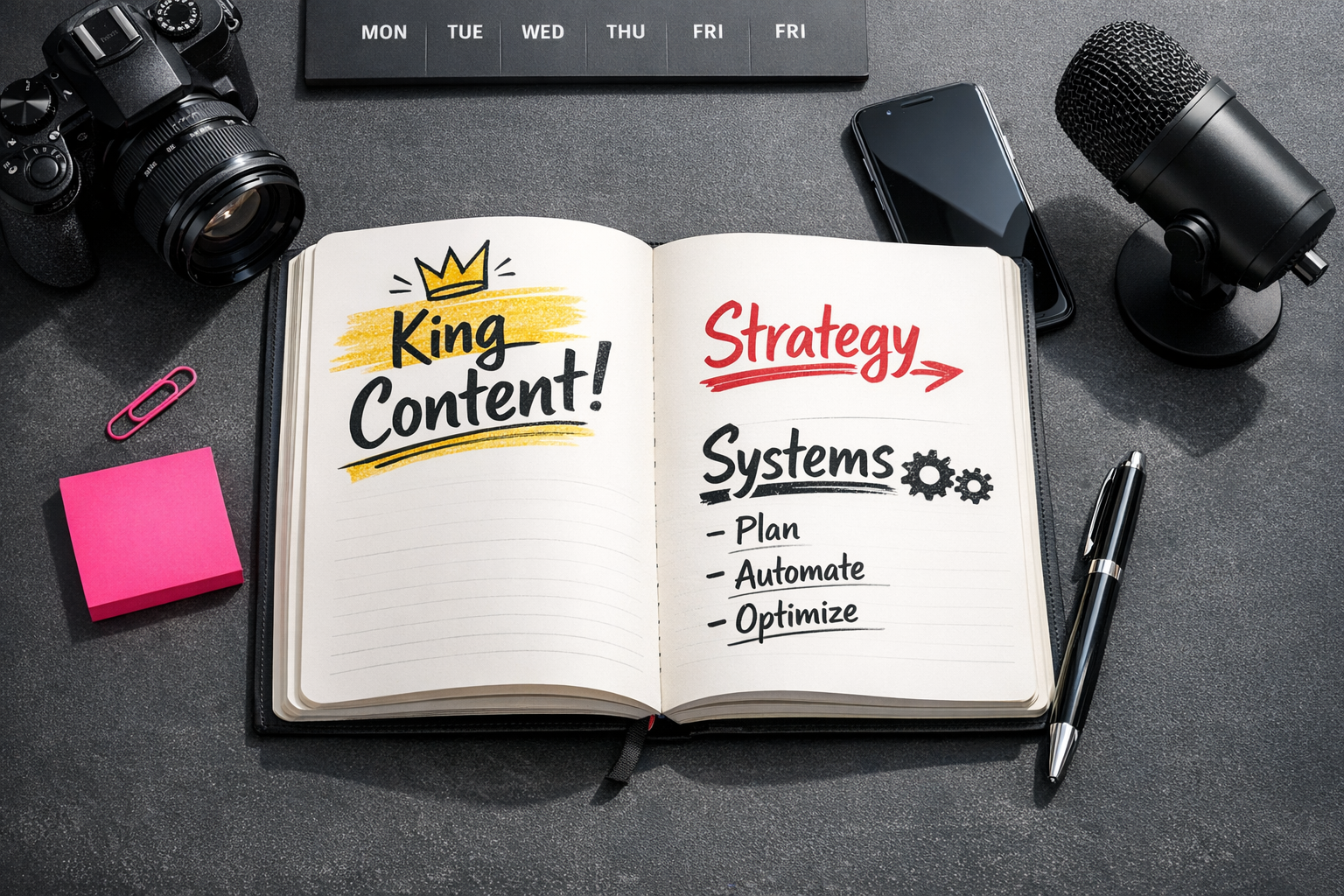
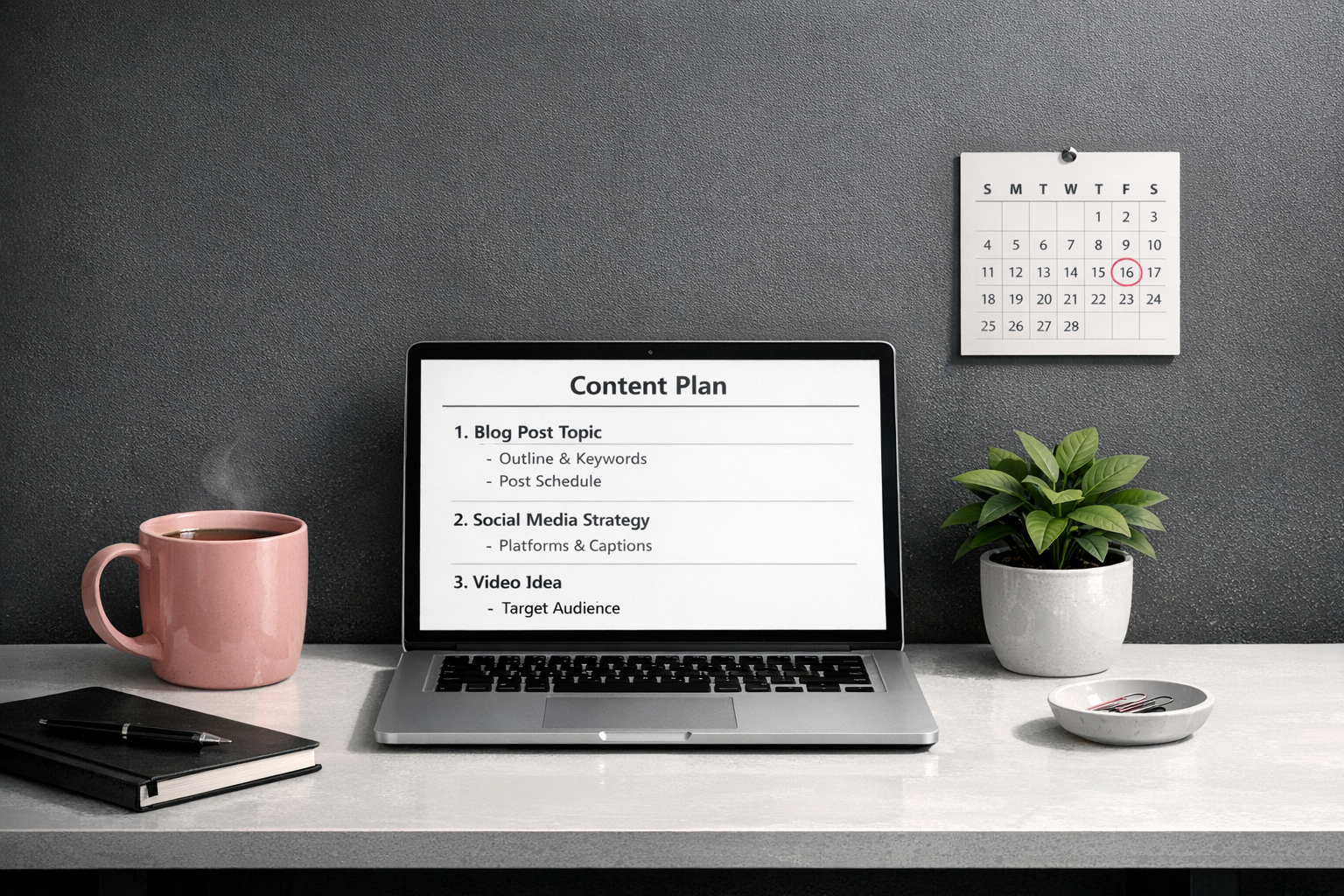
Instead of scattering your effort everywhere, focus on one solid piece of content each week. That’s your anchor. Your content pillar. Everything else comes from that.
This weekly pillar could be:
- A thoughtful blog post or article
- A comprehensive video
- An in-depth podcast episode
- A detailed newsletter
The goal is weight. Something meaty enough to pull apart into smaller pieces. With a batch content approach, one pillar can fuel multiple platforms without you starting from zero every time.
Rethinking your content creation routine to avoid burnout
Your weekly content plan does not need daily reinvention. This is about working smarter, not exhausting yourself.
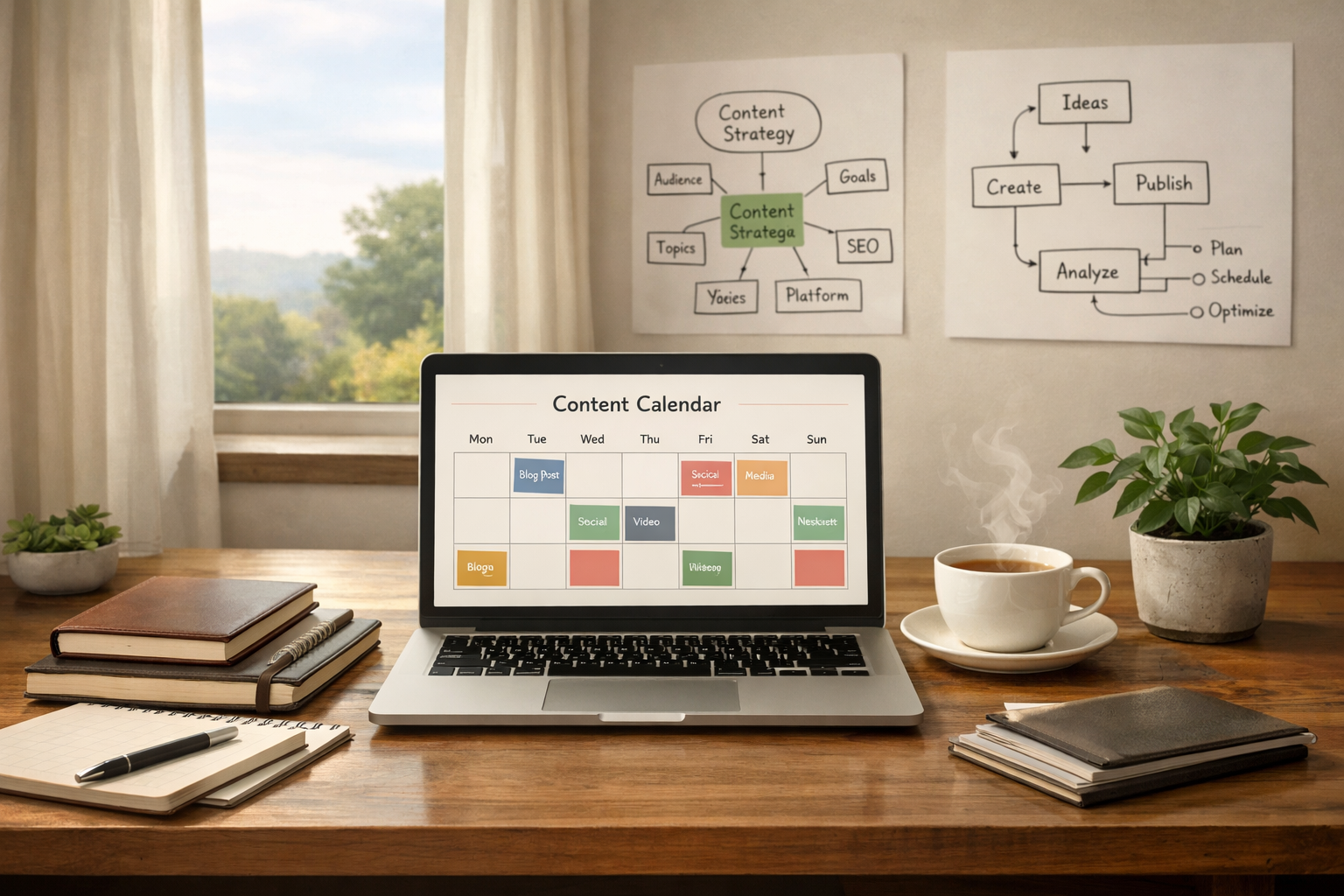
When planning content across platforms, think top-down, not platform-by-platform. Start with the main idea. Create the anchor. Then adapt it for different spaces.
This isn’t just more sustainable. It works better. Your message stays consistent, instead of getting watered down across random posts.
Here’s the truth. Most successful content creators are not making brand new content for every platform. They’re recycling, repurposing and reshaping the same core ideas.
So let’s stop the content treadmill. Build a system that works for real people, running real businesses, with actual lives outside the internet.
Start with a “King”: why one weekly video can fuel your entire content plan
If you’re wondering how on earth you’re meant to show up everywhere every week without losing your mind, this is where to start. Think like a strategist, not a content machine. That shift matters. And it starts with understanding the idea of a “King” piece.
What exactly is a King piece?
A King piece is one solid piece of content you create each week, and everything else comes from it. Most of the time, that’s a video. A live stream. A simple webcam recording. A Zoom session you’d do anyway. Nothing fancy required.
This is not another shiny content trick. It’s a change in how you work.
Most business owners wear themselves out asking, “What should I post today?” on five different platforms. That creator mindset leads straight to burnout. A strategist asks a better question: “How do I get more use out of what I’ve already said?”
This isn’t about being lazy or cutting corners. It’s about valuing your ideas enough to stop letting them disappear after one post. Sharing the same core message in different formats doesn’t water it down. It makes sure people actually see it.
And the benefits go beyond saving time. Using a King piece keeps your message consistent. You make fewer daily decisions. You stop reinventing the wheel. And your authority builds because people hear the same clear ideas across your channels, not a jumble of half-thoughts.
This is especially useful for coaches. When everything centres on one weekly King piece, you only need to be switched on once a week, not every single day.
Choosing Your King Format
When you’re choosing your King format, focus on what feels easiest to stick with:
- A webcam video where you talk directly to your audience
- A live stream with real-time interaction
- A podcast episode where you share your thinking
- A Zoom interview with a guest or peer
- A teaching session where you explain a concept
The format itself isn’t the point. Consistency is. Pick one thing you can commit to weekly and let it feed the rest of your content. Decide on your King piece, and you’ve already taken the biggest step towards a content plan that works without burning you out.

Go live once, be everywhere: how multistreaming gives you scale without extra effort
If you’re tired just thinking about churning out weekly content for every platform, you’re not alone. Here’s the good news. There’s a simple habit that cuts through the noise without burning you out. Go live once a week. Stream it everywhere at the same time. Job done.
The one-to-many content approach that actually works
Let’s kill a stubborn myth. You do not need bespoke content for every platform. You need clarity. Consistency. And to show up where your people already are. You can do all of that in one go.
Multistreaming means one session, multiple platforms. Instead of recording separate videos for YouTube, Instagram, Facebook, LinkedIn, and whatever else popped up overnight, you broadcast once and cover everything.
This is what sustainable weekly content actually looks like. Especially if you want visibility without running yourself into the ground.
Streaming tools demystified
Streaming tools don’t need to be a headache. You’re looking for three things: easy setup, professional enough to not look scrappy, and the ability to broadcast to the platforms you care about.
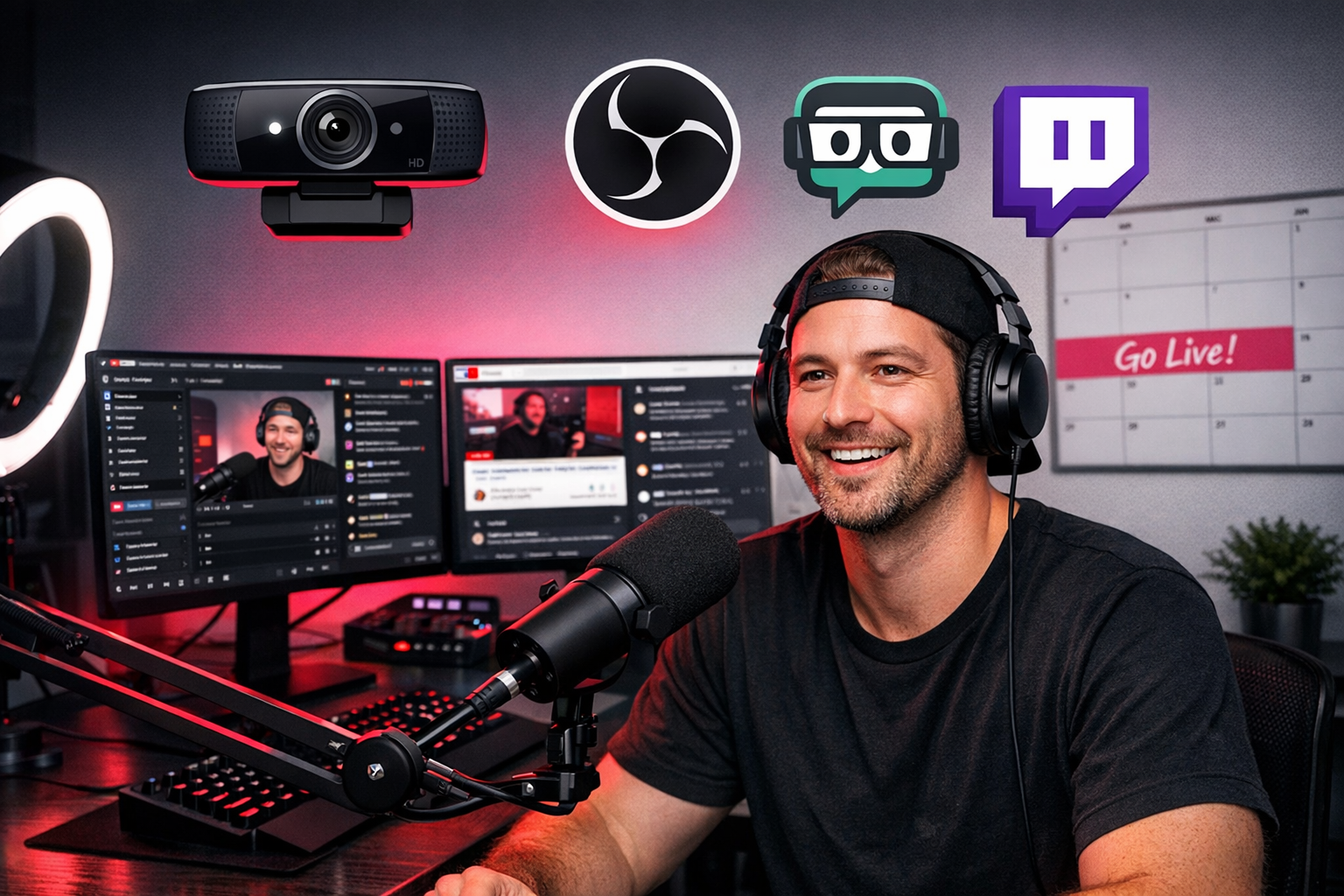
Restream is my top pick for most business owners because it quietly removes a huge chunk of manual effort. You set things up once, go live, and it handles pushing your video out everywhere without you learning five different platforms.
StreamYard is another solid option if you want things simple. The interface is straightforward. You can be live in minutes, not hours.
If you’re more technical, OBS is free and powerful. Just know it comes with a steeper learning curve than the others.
Why live beats perfect
Live works because it’s human. People connect with real, not overly polished. The hesitations, the odd tech wobble, the moment you search for the right word. That’s what makes you relatable.
Live content usually gets more engagement for a reason. Your audience can interact with you in real time. That connection is hard to fake with pre-recorded content.
If you’re batching content for social, live gives you the best return on your time. One focused hour can give you:
- A live broadcast across multiple platforms
- Content for highlights and stories
- Clips for future social posts
- Audio for podcast episodes
- Transcripts for blogs or newsletters
Make it a non-negotiable ritual
The easiest way to avoid content burnout is a regular, realistic schedule. Block the same 60 to 90 minute slot each week for your live session.
That one decision turns content creation from a daily stress into a contained weekly task. You stay visible. You stop constantly scrambling.
Want to simplify your content strategy? Put your weekly go-live in the diary today. One focused effort. Multiple platforms covered. No extra chaos.
Let AI do the slicing: how to create weekly content for every platform without burnout
Ever finish a 30-minute video, look at your list of platforms, and feel tired already? Same. This is where most people stall. Not because they’re lazy, but because content has been made weirdly hard. Here’s the truth: repurposing does not need to be another job. With the right AI tools, it really can be one recording, multiple finished pieces. No drama.
Turn one recording into a content goldmine
The way to create weekly content without burning out isn’t more effort. It’s fewer decisions. Instead of treating every platform like a fresh start, you record once and let AI reshape that one piece for each space.
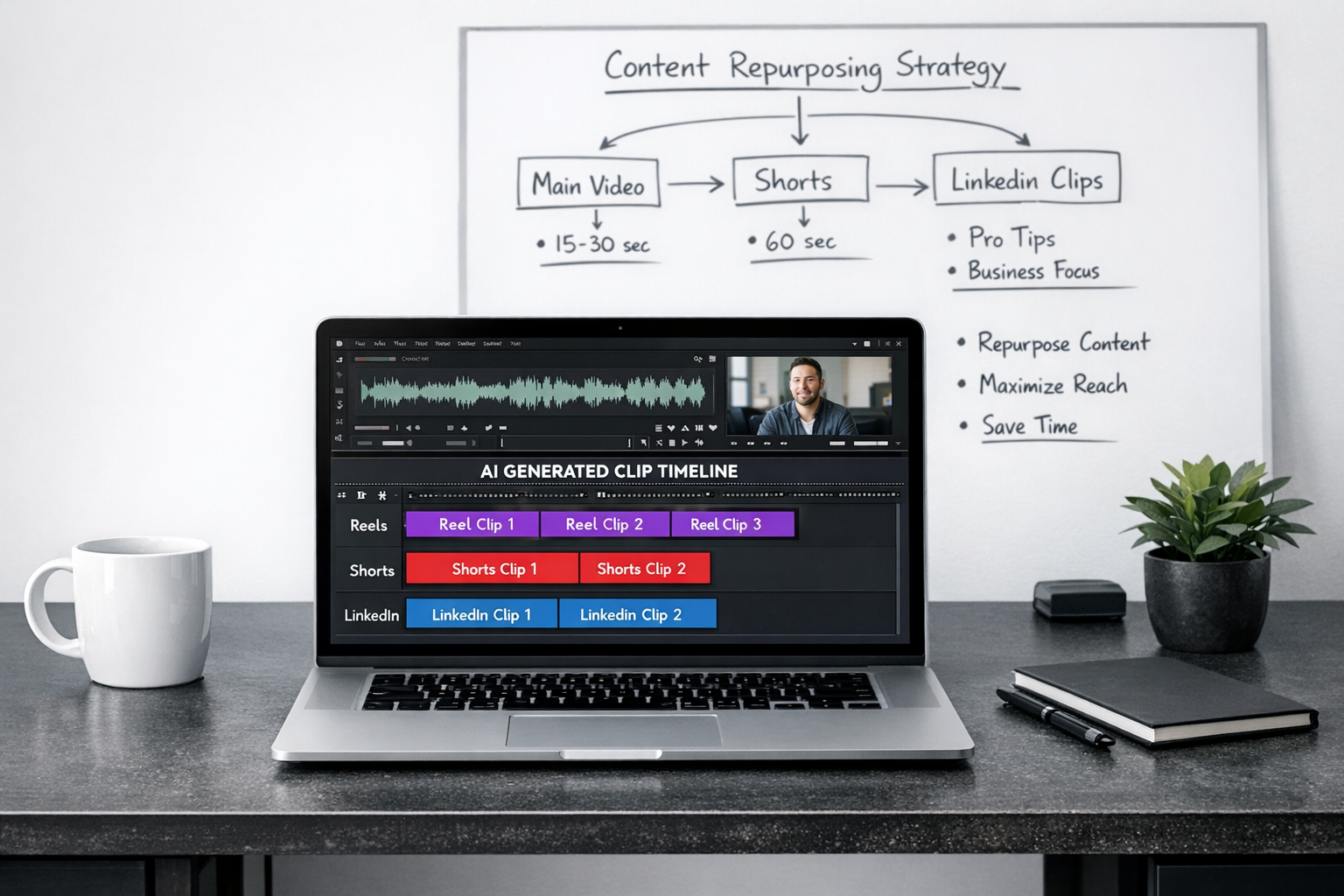
Think of AI tools as a behind-the-scenes content team. They scan your long-form video or podcast, find the strongest moments, and turn them into usable clips. Sixty-second videos. Captions. Correct sizes for each platform. Even headline suggestions. All while you get on with running your business.
Let’s be clear: they’re not magic. You still need to check what they produce and tweak things now and then. But they cut out most of the slog. We’re talking saving roughly 80–90% of the time you’d spend doing this manually.
Here’s what a simple AI repurposing workflow looks like in real life:
- Record your main piece of content (podcast, livestream, or long-form video)
- Upload it to an AI tool like Opus Clip to generate captioned video snippets
- Send the audio to Castmagic to create newsletter content and social posts
- Use Descript if you prefer editing by transcript instead of a timeline
This is where burnout quietly disappears. When this becomes your weekly rhythm, you stay visible everywhere without living online. To your audience, you’re consistent. To you, it’s one recording and done.
When planning weekly content across platforms, put your energy into the main piece. Go deeper there. The stronger the original content, the more useful material AI has to slice up for you. This works especially well for coaches and consultants who need to show up without eating into client time.
Batch creating content for social media isn’t about squeezing more hours out of your week. It’s about building a system that does the boring bits for you. Hit record. Upload. Let AI do the slicing. Then go back to work, or better yet, live your life.
Your real job isn’t posting. It’s making fewer, smarter content decisions.
Let’s be honest about what’s actually draining you when you’re trying to create weekly content for every platform without burning out. It’s not the posting. It’s the constant decision-making.
Every post comes with a pile of choices. What to say. Where to post it. How to frame it. When to share it. What to tweak for each platform. Those decisions stack up quietly until you’re wiped.
The system I’ve been laying out in this article isn’t about squeezing more output from you. It’s about protecting your brain. When content becomes simpler and more predictable, you get your thinking space back. That’s what lets you do solid client work and make decent decisions in the rest of your business.
Reject the volume trap
More content does not equal better content. Platforms would love you to think it does. Their model relies on you churning things out nonstop.
I see smart business owners wreck their energy trying to keep up with posting schedules they didn’t choose and don’t even like. None of that is essential. What is essential is consistency you can actually live with.
Most people would much rather see four useful, well-thought-out posts a month than twenty rushed ones they forget five minutes later. Avoiding burnout means getting comfortable with doing less, and doing it properly.
Redefine your content success metrics
Here’s what’s actually worth paying attention to when you’re planning weekly content across platforms:
- Simplicity: Can you explain your content system in one sentence?
- Reach: Are you getting in front of new potential clients, not just talking to the same people?
- Recovery: Do you have real downtime between creating content?
- Impact: Are you solving problems your audience actually cares about?
- Sustainability: Could you keep this up for a year without feeling cross about it?
Notice what I didn’t list. Posting frequency. Being everywhere. The content strategies that actually work focus on effectiveness, not optics.
The ultimate sanity check
If your content still feels heavy even after batching and streamlining, that’s not a discipline issue. It’s a signal your system is bloated.
Cut it back until it almost feels too easy. Then do that consistently. You can always add things later. Recovering from burnout takes far longer than simplifying in the first place.
Your edge is not being everywhere at once. It’s showing up calmly, clearly, and reliably while others run themselves into the ground. Creating weekly content without burnout usually means admitting that “every platform” really means two or three that genuinely matter for your business.
Your content routine should support you, not boss you around. If it doesn’t feel that way, something needs fixing.
If you want a content system that fits your actual life, you can book a strategy session. We’ll strip it back, make it sustainable, and build something you won’t resent sticking to.
Sources:
“Adobe Creator Economy Report” (Adobe, 2025)