

Why Most Facebook Groups Fail (And How to Build One That Makes Sales)
I see this pattern constantly. Someone launches a Facebook group with big energy, posts daily for a couple of weeks, then momentum drops off. Activity dries up. What remains is a digital ghost town of unanswered questions and thinly veiled self-promotion. If I’m looking at whether Facebook groups are worth the time in 2026, I’m already thinking about the right problem.
Facebook groups can still work for business. They just do not work by accident. Most groups fall apart because they lack intention, structure, and a clear link to how the business actually makes money. They turn into another task to manage instead of an asset that supports sales.
In this article, I break down why Facebook groups typically fail and how to build one that contributes to the bottom line without needing constant hand-holding.
Key Takeaways
- Most Facebook groups fail because they sell the container rather than a clear, valuable outcome people actually care about
- Successful groups centre on a Tribe Magnet – a consistent, specific experience like weekly teardowns or monthly masterminds that gives people a real reason to join and come back
- Live video drives a level of engagement static posts cannot match – recurring live sessions create rhythm and habit that turn lurkers into an active audience
- Depth beats size every time – a smaller group with real engagement will outperform a large, quiet one where nothing meaningful happens
- This works best when I think like a showrunner, not a host – planned, valuable episodes people make time for outperform hoping conversation appears on its own
This is how I turn a Facebook group from a digital ghost town into a business asset and build from there.
Why Most Facebook Groups Fail (And How to Build One That Makes Sales)
Let’s be honest. Most Facebook groups are graveyards. You join with good intentions. There’s a burst of energy. Then it all quietly dies. You’ve seen it. A few unanswered questions. A pile of self-promotional posts. Nothing of value.
As of 2026, Facebook groups can still work. But most don’t. They don’t build momentum, and they definitely don’t make sales. If you want a group that actually pulls its weight in your business, you need to understand why so many of them flop first.
The Common Facebook Group Death Spiral
The pattern is boringly familiar. Someone starts a group full of hope, invites everyone they’ve ever met, and posts daily for a fortnight. Then life kicks in. Running a group takes effort. Without a plan, engagement drops fast.
People stop replying. Some leave. Most stay and ignore everything.
Here’s why Facebook groups usually stall and never convert:
- No clear reason to be there beyond “join my community”
- Patchy posting that teaches people not to bother checking in
- Too much promo that feels awkward and self-interested
- No moderation, so spam and random posts take over
- No plan for turning comments into actual business
- Weak onboarding that sets no expectations and creates no connection
The hard truth. A Facebook group doesn’t work just because it exists. It needs intention, structure, and a clear link to how you make money. Otherwise, it’s just another free space draining your time.
The Profitable Facebook Group Framework
Groups that make sales aren’t lucky accidents. They’re built on purpose. The owners know they’re not running a vague “community”. They’re creating a focused space where specific problems get solved.
If you want a Facebook group that brings in sales, you need three basics:
- One clear problem the group exists to help with, tied directly to what you sell
- A steady content rhythm people can rely on
- Obvious routes from free group value to paid support
The businesses doing this well in 2026 aren’t chasing huge numbers. They’re building smaller, sharper groups where their expertise is obvious and their paid offers make sense as the next step.
That’s why it works. Your goals and your members’ needs aren’t fighting each other. The group becomes more than a marketing channel. It becomes a product in its own right, quietly proving why working with you makes sense.
In the next sections, I’ll walk through how to put this into practice, without falling into the same Facebook group traps that kill most of them early.
Most Facebook groups fail because they’re trying to sell a box, not a gift
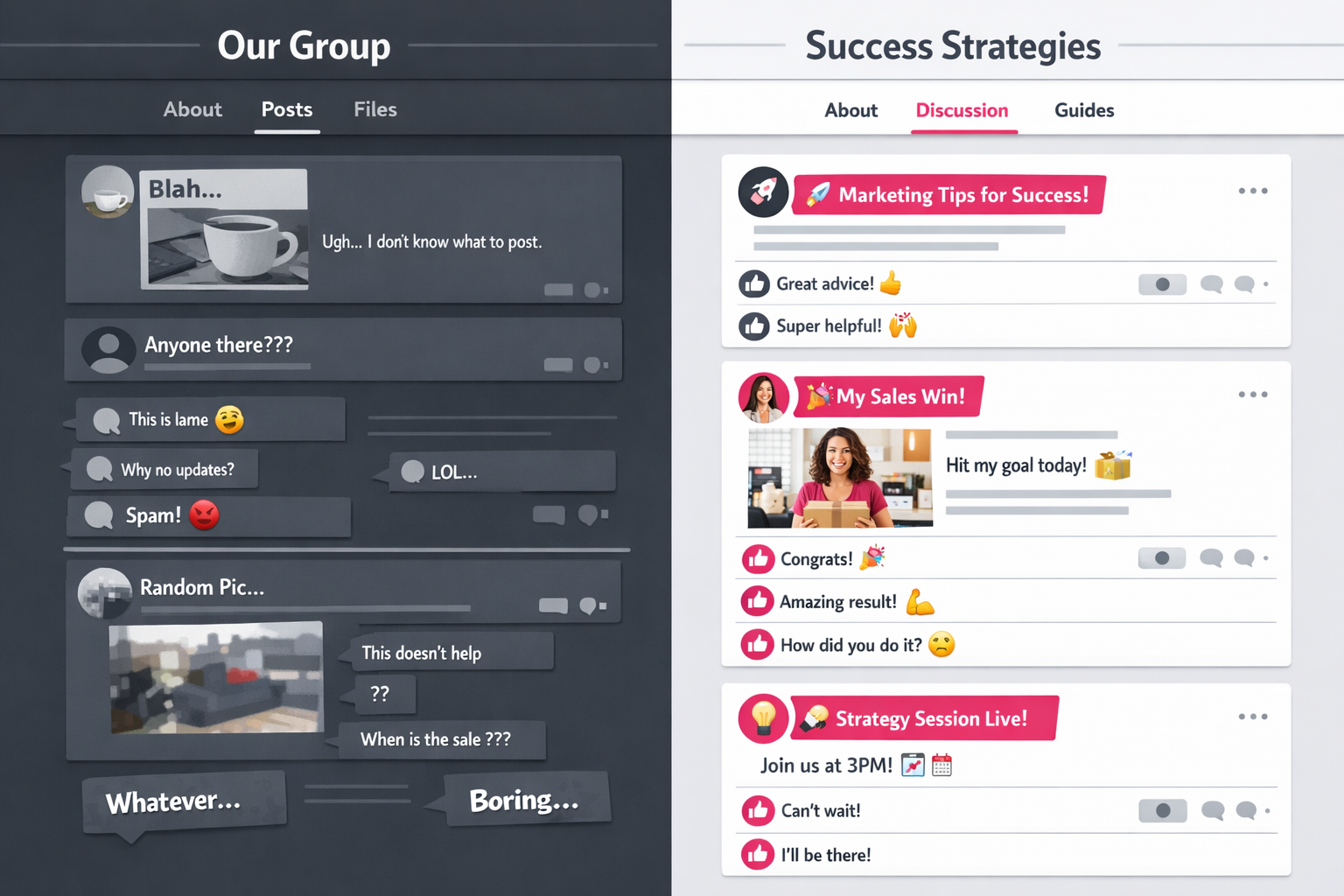
Let’s be honest about why most Facebook groups flop. It’s 2026. Meta keeps fiddling with the algorithm. And Facebook Groups are still everywhere. Businesses love them. Yet most are empty. Quiet. Dead.
The issue isn’t technical. It’s psychological. When you say, “Join my free Facebook group for tips,” what you’re really asking is this: please add more noise to your already full online life. No one wakes up hoping for another group to keep up with.
People don’t join Facebook groups for the joy of joining. They join for a result. A shift. Access to something they actually want. Another place where content might appear is not appealing unless it fixes a clear, urgent problem.
The empty box syndrome
Most Facebook group mistakes come from selling the container, not what’s inside it. I see business owners announce their shiny “new community” with zero clarity on why it matters.
Meanwhile, the person on the other side is asking, “What do I lose if I don’t join?” If the answer is fuzzy words like “tips”, “support” or “connection”, you’ve lost them. Those are vague. And they’re available everywhere.
In 2026, attention is expensive. People are ruthless about where they spend it. If your group sounds like every other group, it’ll end up exactly where they do. Abandoned.
Turn your group from a container into an experience
If you want a Facebook group that actually leads to sales, you have to stop promoting the box and start showing the gift. Give people a clear reason to walk in and come back.
Instead of “Join my group for business tips,” say, “Join us this Thursday for a live training on cutting your client acquisition costs by 30%, held only inside the group.” See the shift? One is an empty box. The other promises a defined outcome.
The Facebook groups that work for small businesses aren’t chasing big numbers. They’re built around participation. Momentum. Specific things people show up for, like events, challenges or truly exclusive content. When someone joins for one clear reason, they’re far more likely to stay for what grows around it.
Here are the shifts that stop your group going stale:
- Focus on specific events, not vague ongoing membership
- Create time-limited experiences people don’t want to miss
- Position the group as the only place something valuable is happening, not the value itself
- Write your invitation around the next immediate benefit, not some future sense of “community”
Don’t build another empty room on the internet. Build something worth turning up for. That’s how a Facebook group lasts, stays active, and actually supports your business.

The only reason people join a group in 2024: a clear, compelling promise
Let’s be honest about why most Facebook groups flop. They give people no real reason to join. Vague talk of “community” or “connection” doesn’t cut it anymore. In 2026, people want to know exactly what they’re getting before they give you their time.
Here’s the bit that stings. Nobody cares about your goals or what you’re building. They care about what’s in it for them. When that’s missing, engagement dies. Sales never happen. That’s why so many groups turn into ghost towns.
Your group needs a “Tribe Magnet”
Your Facebook group needs to be built around one clear, useful promise. I call this a “Tribe Magnet”. It’s a specific, repeatable thing that gives people a solid reason to join and stick around.
A strong Tribe Magnet could be:
- Weekly teardowns of landing pages or email sequences
- Live Q&A sessions with actual expertise, not waffle
- Behind-the-scenes walkthroughs of processes people want to learn
- Monthly masterminds tackling one clear problem
Generic names like “Business Owners Connect” or “Marketing Mastermind” say nothing. They’re easy to ignore. “Weekly Funnel Fix with Jamie” or “Thursday Tech Teardowns” tells people exactly why they should care.
Rhythm beats random every time
Groups with a clear rhythm always beat random posting. Asking “How’s everyone doing today?” doesn’t build engagement, and it definitely doesn’t build sales.
What works is a ritual. Something reliable. When members know that every Tuesday at 2pm they’ll get straight feedback on their work, or that the first Monday of the month means a focused teaching session, they have a reason to show up.
Your Tribe Magnet is the backbone. It’s what builds trust over time. It turns your group from a noisy chat into a place people actually value. And when that happens, sales conversations happen naturally.
The strongest Facebook group strategy for small businesses isn’t about posting more or chasing numbers. It’s about delivering consistent, specific value that matches what your ideal clients actually want.

A group isn’t a marketing channel until it becomes a venue for live energy
Most Facebook groups fail for a very simple reason. People think posting content equals marketing. It doesn’t. Stagnant groups are basically digital notice boards. Not places anyone wants to hang out.
The real difference is live energy.
Live video transforms engagement from passive to active
Static posts don’t really cut it anymore. Even the keen followers are scrolling straight past your carefully written updates. Facebook knows this. That’s why live video beats every other format on the platform.
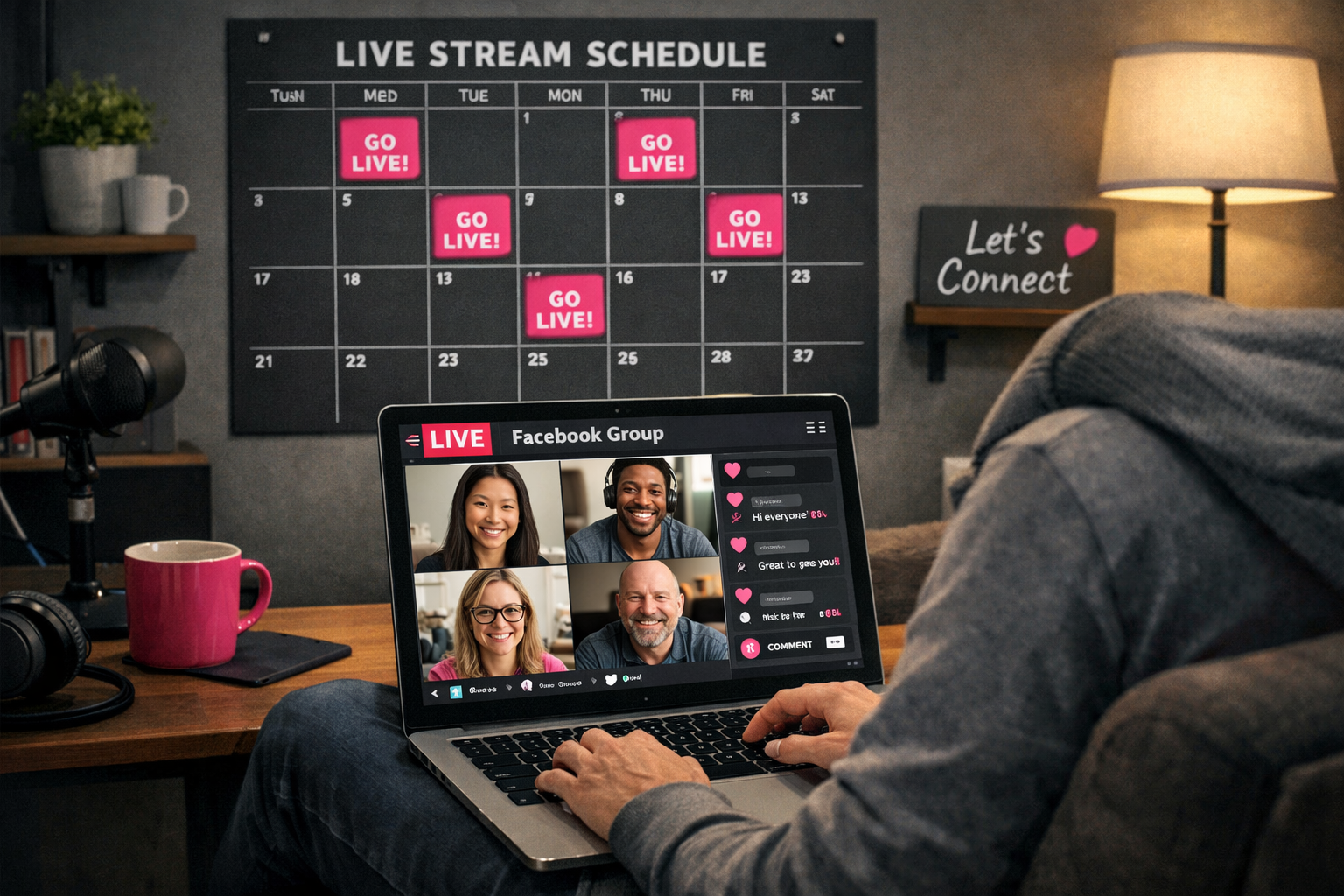
Go live. Rough edges and all. It turns your group from somewhere people dip into into somewhere they actually show up for. When members can see you and hear you in real time, you stop being another notification and start being a human being they recognise.
This is what running a successful Facebook group looks like in 2026. The groups that last create experiences. Not content libraries no one opens.
Create rhythm with recurring live events
Random, one-off lives might give you a short boost. They don’t build a community. Rhythm does.
Instead, pick something predictable and repeat it. “Monday Mindset”, “Wednesday Workshops”, or “Friday Q&As” Whatever works for you. When it’s consistent, people start expecting it. They plan for it. They show up.
This is the bit a lot of business owners miss when they wonder why their group stalls after the initial buzz. Consistency builds habit. Habit builds audience.
Appointment viewing matters. It’s the difference between a group full of names and an audience that actually pays attention.
Your group becomes a sellable experience
When live interaction is part of your Facebook group strategy, your group stops being just another marketing channel. It becomes a place. A place where people get clarity, momentum and real connection. With you and with each other.
That’s what makes it valuable. And yes, sellable. When people get genuine value just by being there, selling doesn’t feel pushy. It feels obvious.
A common mistake in Facebook group marketing is rushing the sale without doing this first. Groups that sell well don’t shout louder. They build live value until buying feels like the next sensible step.
I recommend testing one simple recurring live you can actually stick to. Keep it easy. No fancy setup needed. A coffee chat, a quick tutorial, StreamYard or Facebook’s native live is more than enough. The point is showing up. Every time.
Because learning how to build a Facebook group that makes sales starts with building a group people genuinely want to be part of.
Small group, big ROI: why your best clients start here
When I look at why most Facebook groups flop, it usually comes down to one thing. They’re chasing size instead of engagement. Straight truth: you don’t need thousands of members. You need the right people actually showing up. People who look like your ideal client and behave like one.
Quality over quantity is your sales secret
A small group with real participation will always beat a huge, quiet one. Every time. When people feel connected to you and to each other, they buy sooner and stick around longer.
This is why so many Facebook groups never pull their weight. They’re built for scale, not depth. The owner is busy counting members instead of paying attention to the conversations that build trust.
Look at what actually happens inside an engaged group:
- Every live Q&A shows how you think and how you solve problems
- Comments and replies let people see your expertise in real time
- Member wins act as proof without you having to shout about it
- Real connections shorten the time it takes someone to buy
- DMs start naturally because the relationship is already there
Done properly, a Facebook group becomes a very human way to sell. People move from curious to confident without feeling marketed at.
The businesses that get real results from Facebook groups understand this. Growth comes from good conversations, not big numbers. They plan their groups around interaction, not vanity stats.
Now pause and think about your last three clients. Did your group play a part at any point? If not, there’s probably money being left on the table.
Most Facebook group mistakes come from trying to grow too fast before trust is built. The smartest approach for small businesses is simple. Depth first. Growth later.

If you want a group that grows, stop thinking like a host. Think like a showrunner.
Why most Facebook groups fail is not a mystery. It is painfully predictable. You create the group, add some friends, post a welcome message, and then… nothing. That awkward silence where everyone is waiting for someone else to go first.
Here is the real problem. Most group owners act like polite hosts. They open the door, let people in, and hope conversation magically appears. It almost never does.
From host to showrunner: the mindset shift that changes everything
The groups that actually work are run by people who think like showrunners, not hosts. A showrunner does not just create a space; they create a repeating experience people plan their week around.
Think about your favourite TV shows. You did not watch them just because they existed. You watched because every week something specific happened that you did not want to miss. That is the mindset your Facebook group needs.
Your job is not to talk louder or post every day. It is to be clearer about the value you are reliably delivering. What is the one useful thing you can show up with every week that proves you know your stuff and gives people a reason to come back?
Maybe it is:
- a weekly Q&A where you answer real questions,
- a monthly deep dive into one clear strategy,
- a regular guest expert your audience cannot hear anywhere else.
Over time, when your group becomes the place where that one thing happens, it stops being just another Facebook group. It becomes a destination. Engagement improves. Sales follow. Not because you pushed them, but because trust was built.
Why most groups quietly die
This is why Facebook groups stall. There is no strong reason to return. Most Facebook group marketing fails because people create a space but never create a show.
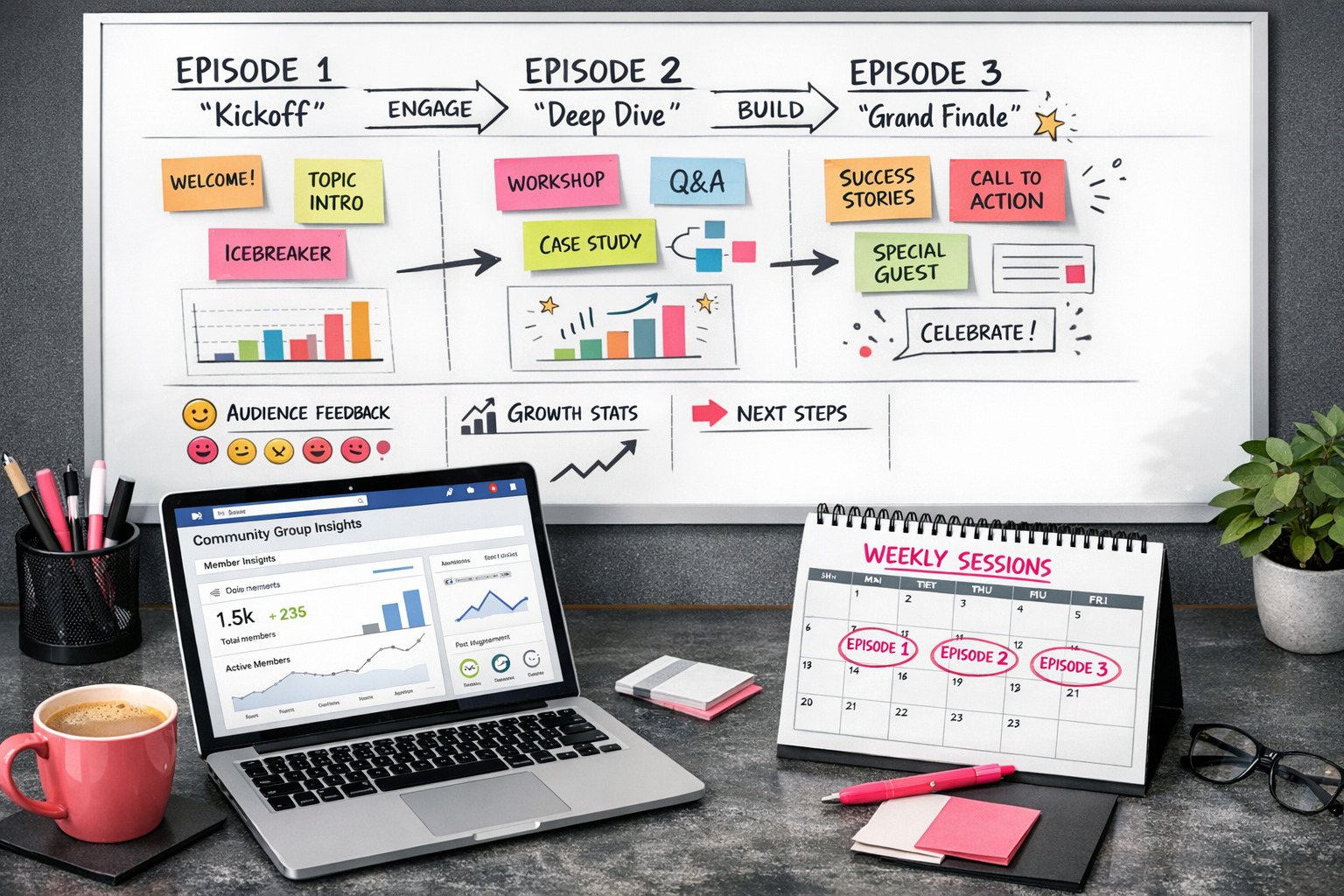
Certainly, check your Facebook Group Insights to see what lands. But more importantly, block time in your calendar for your episodes. Treat this as a real commitment, not something you squeeze in when you remember.
If you want a Facebook group that actually makes sales, start with a simple three episode arc. Think of it like a short season. Ask yourself: what would those first three sessions cover, what problem would each solve, and what would each one teach? How do they stack together to show your expertise clearly?
Get that right and you are already ahead of most group owners because you are building something people want to come back to, not another group that slowly goes quiet.
Sources:
“Social Media Today Engagement Report” (Social Media Today, 2025)