

Building a Vibrant Online Community
Ever stared at the quiet feed of your online community and thought, “Where is everyone?” I’ve launched communities with a rush of excitement, only to hear nothing but silence. Choosing the right online community software isn’t just about tech; it can make or break your chances of building a vibrant ecosystem instead of a deserted digital ghost town.
Many reviews miss one crucial truth: fancy features don’t matter if your members aren’t using them. It’s all about finding software that aligns with real human behaviour, not complicates it. That’s why I’m all in on Skool. It’s crafted for creators and coaches who want real engagement without the usual tech headaches.
What to Expect
In this article, I’ll share what truly works. We’ll start with easy options where your people already hang out, before considering dedicated platforms once you’re ready to add some structure, monetisation, or scale. No rush, no hassle—just straightforward advice for building a community that people want to join.
Key Takeaways
- Many online communities struggle with engagement because their platforms create barriers. The right software removes these obstacles.
- Start where your audience already is, whether that’s Facebook Groups or WhatsApp. This way, you can test your concept without technical friction.
- Free platforms often limit your growth with branding restrictions and unpredictable monetisation—watch for these early signs.
- Platforms like Skool promote sustainable engagement by blending simplicity with features designed for creator ecosystems.
- Successful monetised communities often use tiered membership structures and exclusive experiences, with the platform managing payments in the background.
Always remember, your community software should feel invisible to your members. When they’re more focused on connecting with each other than on the platform itself, you know you’ve made the right choice.
Why Most Online Communities Go Quiet (And What to Do Differently)
Let’s be honest—starting an online community is a thrill, but then… silence. You’ve put your heart into building this space, so why does it feel like a ghost town? Those lively chats you imagined? Now, barely a whisper.
But don’t fret; you aren’t in this boat alone. Just 20% of members in branded communities are actively joining in. The rest? They’re lurking, feeling overwhelmed, or simply fading away.
Here’s some hopeful news: it’s probably not you or your content. It’s the software you’re using and how everything’s set up.
Why Your Community Feels Like an Echo Chamber
Many people bail on communities because they’re bombarded with too many alerts, irrelevant posts, or just a confusing mess of content. Classic digital overload.
Think about it: how many Slack channels have you muted? How many Facebook groups have you turned off? We’re all battling against the tide of information.
Your members aren’t uninterested—they’re just overwhelmed. Each platform clamours for more clicks and attention. Over time, they mentally check out, even if they’re technically still there.
Top-notch community software understands this challenge and addresses it with smart design. When choosing a platform, look for those that make participation easy, not draining.
I’ve seen many coaches struggling with clunky platforms that turn simple chats into chores. Your software should remove hurdles, not create them.
Take a look at Skool. It’s specifically tailored for creators and coaches, with engagement at its core—not just added as an afterthought.
What Thriving Communities Do Differently
Communities that maintain steady engagement excel in a few key areas:
- Clear and intuitive layout – Members should never wonder “where do I post this?” or “how do I find that?”
- Thoughtful notifications – Not every post needs an alert. Smart filtering cuts through the noise.
- Mobile-first approach – People often dip in on the go, typically on their phones.
- Visible activity – Fresh faces need to see others joining in before they do.
Many small business platforms overlook these essentials. They go for flashy tools while missing basic human behaviour.
The software you pick really matters. It goes beyond features—it’s about feel. Does your platform invite interaction, or does it put up barriers?
Free community platforms often cost you in engagement levels. Paid ones typically deliver better tools for genuine connection.
Want a lively community? Explore how Skool builds communities differently. Their design encourages action, not just browsing.
Take a moment to assess your community setup. Is it easy for folks to connect, or are there unseen hurdles? The right platform should fade into the background—encouraging connection, not demanding attention.
Ready to change things up? Dive into creator-friendly platforms like Skool and discover how they transform passive members into actives with designs that respect their time and foster meaningful engagement.

Start Where Your People Already Are (Yes, Even If It’s Messy)
The fanciest community software won’t mean much if it’s a ghost town. When you’re kicking off or trying something new, going where it’s easiest often works best.
I’ve seen it time and time again: stick to simple. Fancy platforms can wait. The key is to gather your community somewhere they’ll actually want to be.
Free and familiar platforms serve as the training wheels for your community. Sure, they might lack all the bells and whistles, but they cut out the hassle of learning yet another new system.
Embracing “Borrowed Land” for Easy Community Building
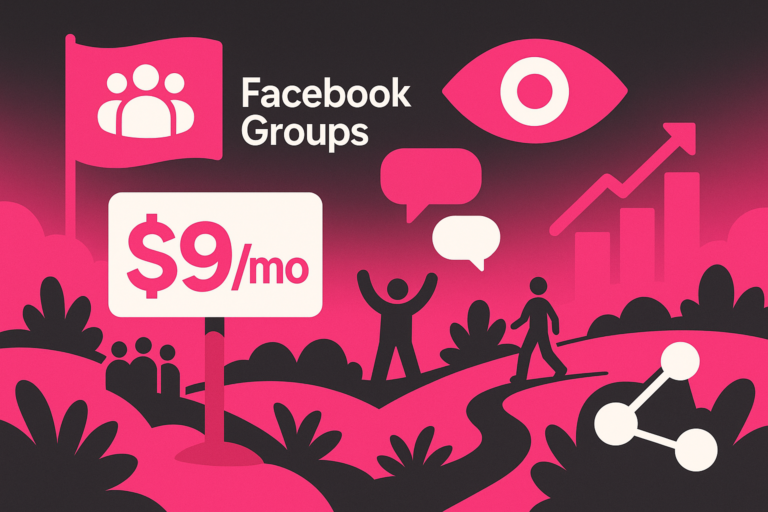
Facebook Groups still do the trick for early-stage communities. Your people already hang out there, so joining in is a breeze. With good reach and basic tools, it keeps things straightforward.
WhatsApp and Telegram? Perfect for cosy, trust-based spaces and personal coaching vibes. Messages pop right onto their phones, making everything feel a bit more connected.
Then there’s Discord, the go-to for creators in tech, finance, and gaming circles. Its channels and live chat options let members dive into topics that matter to them.
How to work with the algorithm, not against it
These free platforms have some handy perks:
- No onboarding fuss for your members
- Apps are already there, just waiting to be opened
- Free to set up, free to run
- Test out community ideas with zero spend
They’re great for getting a beta group together or launching a new coaching gig. Familiarity means folks will join in.
That said, the features that make these platforms easy now might limit you as you grow. They often lack analytics, monetisation, or a custom feel that larger communities might need.
When it’s time to step things up a notch, platforms like Skool hit that sweet spot between big social tools and specialised community software. With its user-friendly interface and community-building features, you’ll create a space that’s both comfy and professional. Skool blends the best of both worlds.
Starting simple lets you zero in on what really matters: real connections and genuine engagement. Your early chats will clue you in on what your community finds valuable.
Keep an eye out for which topics spark conversation, what questions pop up repeatedly, and where folks seem to hit a wall. These insights will steer your community plan, no matter where you end up hosting it.
Remember, community software is just a tool—it’s the relationships that are your true gold. Start where your people already are, messy as it might seem. The perfect community platform isn’t the flashiest, but the one where your folks actually show up.

When Free Tools Start Limiting Your Growth
Free online community tools are a dream at first. They’re easy to set up, don’t cost a penny, and your people are already there. What’s not to love, right?
But as your community expands, cracks start to show. Many creators don’t even realize these limitations are what’s holding them back.
The Hidden Costs of “Free” Community Platforms
First off, branding. You can’t really make these spaces your own. Your community ends up looking generic, which makes it tough to create that unique vibe that keeps members coming back.
Then there’s how you organise. Want to set up your content in course modules? Or create member-only areas based on what they’ve purchased? Most free platforms just don’t play ball.
And here’s the kicker. Reaching your audience consistently? That’s a gamble. One day, your posts engage half your members; the next, it’s like no one even sees them.
Facebook Groups might feel familiar, but with their unpredictable algorithm, you’re left guessing. One moment you’re on a roll; the next, your posts seem to vanish. So, building your business here is like constructing on shifting sands.
Discord? It offers flexibility, sure. But as you grow, things can get chaotic. New members face a steep learning curve, and maintaining order takes a significant amount of moderation time.
The Monetisation Roadblocks
Selling on these free platforms can be a headache. You’ll face:
- Restrictions on how you sell.
- Clunky payment processes that can feel a bit dodgy.
- No easy way to integrate with your other essential tools.
- No control over your customer data.
- Limited insights into what’s working.
If you’re serious about scaling up, running structured programmes, or maintaining control over your audience data, it’s time to rethink these borrowed spaces.
When it’s time to deliver top-notch experiences without the platform interfering, consider dedicated community tools.
Purpose-built software provides you with control over your community, stable communication, and effortless monetisation.
Enter Skool. It’s a game-changer, seamlessly merging community, content, and commerce.
What makes Skool exceptional is how it was designed with course creators and coaches in mind. It strips away the tech hassle you typically find in more complicated options.
So when your free platform starts feeling like a restriction instead of a launchpad, take a peek at Skool. It’s a step toward a solid foundation for growth. Your community—and peace of mind—will thank you.

Finding the Right Path to Community Success
When your community’s buzzing and growing, it’s easy to get swept up in the urge to stack more tools. But, here’s the thing: it’s not about piling on the gadgets—it’s about streamlining your approach. Quality online community software is your secret weapon here.
Juggling different platforms? It can turn into a tech circus pretty quickly. Your members will feel it too, hopping from one platform to another just to stay connected.
The Power of All-In-One Platforms
The top community platforms put everything you need right in one spot. Take Skool. It’s made for creators craving engagement without the stress of managing multiple tools.
What sets Skool apart? It’s all about simplicity:
- A clean, chronological discussion feed that keeps chats manageable
- Hosting for courses, so your content’s home is with your community
- A user-friendly event calendar that members actually look at
- Clever gamification for real participation, without the fluff
This type of setup is a game-changer for how your community feels. Instead of scattered fragments, it’s a unified whole.
Natural Engagement, Not Forced Interaction
The magic lies in the smooth flow of interaction. Skool encourages engagement that feels organic. Members unlock content as they participate, turning every comment and question into a step forward.
No forced participation here. People stay because they’re genuinely interested, not because another app is badgering them.
I’ve watched creators burn countless hours trying to piece together platforms when solutions like Skool offer a neater, smarter path. The tech hassle you save makes a solid case for an integrated setup.
Sure, free software might catch your eye, but they often miss that essential glue which holds a community together. Members sense a disconnect when things don’t quite align.
Built-for-purpose software is about ending “tool fatigue.” No more tech stacks patched together with digital duct tape.
Your members are after a straightforward, intuitive space. They don’t need a tech obstacle course to connect.
Ready to level up your community without the chaos? Check out what Skool brings to the table. It’s got all the essentials but keeps it simple and easy for everyone involved.
The right software isn’t just a convenience—it reshapes how your community feels to the people who matter: your members. Give them that seamless journey, and watch how engagement naturally flourishes.

How creators are making real money from their communities
Your community can be more than just a friendly place to chat—it’s a genuine source of income waiting for you to explore. Fast forward to 2025, and the savviest creators have shifted their perspective. Communities aren’t just nice extras; they’re integral to a thriving business model. The right online community software? That’s what separates a casual hangout from a buzzing, money-making platform.
In the past year, this shift has been impossible to ignore. Community monetisation is becoming smarter, more purposeful, and—let’s face it—more lucrative.
Let’s dive into what’s actually working:
Subscription communities that bolster your business
Monthly subscriptions have found the sweet spot—affordable and valuable. That £25-£80 a month? It’s accessible for most and still generates solid revenue.
Get 100 people paying £40 a month and bingo—nearly £4,000 in monthly income. It’s the kind of stability that forms the backbone of your creator ecosystem.
One-time purchase communities are just as lively. The whole “pay once, access forever” approach? Instant cash flow paired with long-term engagement—everyone’s in it for the long haul.
Smart creators are embracing tiered systems. Start with a free basic community that’s genuinely valuable, then invite folks into a premium “inner circle”—complete with perks like direct Q&A, feedback, and personalised guidance.
The revenue model behind subscription communities
The platform you choose should fuel your vision, not stifle it. And that’s why Skool is a hit with monetised communities. It covers payment processing and handles member access levels smoothly, so you’re not juggling multiple tools.
What makes Skool stand out? It manages payments efficiently while placing the community at the centre. Tweak prices, offer promotions, and discover what drives your earnings—all in one spot. Curious? Check out how Skool might revolutionise your monetisation strategy.
Mighty Networks and Circle are also excellent choices—especially for complex membership tiers or if you’re packaging courses with community access. These platforms evolve as your business does.
The main thing isn’t just which platform you pick—it’s choosing one that aligns with your business plan. Don’t let your platform box you in. The best software adapts to fit your strategy.
Here’s the playbook for successful creators:
- Set clear membership tiers (free, standard, premium)
- Offer exclusive experiences to justify those premium prices
- Host regular live sessions—something members can’t find anywhere else
- Listen to community feedback to shape new, desired offerings
If you’re running a free community or an online business without a community, you might be missing out. Skool’s monetisation tools make it simple to start earning from your expertise.
Why not test a paid tier with your current setup? The quick return might surprise you, and those paying members? They’ll provide insights into your audience like nothing else. Consider giving a paid community tier a trial this week—it could be just what your creator income needs.

Sources:
“The Community Roundtable” (The Community Roundtable, 2025)