
Building a Thriving Community on Facebook
Ever tried to build a thriving community on Facebook? It can be frustrating when your important posts get lost in a sea of cat videos and family updates. I’ve been there too. Facebook Groups seem like the go-to option for launching a coaching business. They’re familiar, free, and everyone’s already using them. But those perks come with some serious drawbacks that can stifle your growth and make monetisation a challenge.
The Limitations of Facebook Groups
While Facebook Groups offer initial visibility and no costs, they’re not built for converting engagement into income. That’s where platforms like Skool come in with their new £9/month plan. It’s a great bridge for coaches and creators who want to move from free chaos to a focused community without breaking the bank. In this article, I’ll cover when to stick with free platforms, when to upgrade, and why Skool might just be the smartest next step for your growing community.
Key Takeaways
- Facebook Groups are the best free community platform for visibility and reach, with 3.2 billion monthly users to connect with.
- Free platforms come with major limitations: algorithm changes, poor content organisation, distractions, and limited monetisation options.
- Skool‘s £9/month plan offers a perfect middle ground between free platforms and pricier community tools, integrating community, courses, and commerce in one space.
- Think about upgrading when engagement starts feeling scattered, when your content gets buried, or when you’re ready to introduce structured learning paths and monetisation.
- Successful community builders often use a hybrid approach—starting with free platforms to test ideas, then moving paying members to dedicated platforms designed for conversion.
Your community deserves a space that aligns with your ambitions. Start free, but know when it’s time to grow.
Why Facebook Groups Are Still Top for Free Visibility and Growth
Let’s get straight to the point. If you’re googling “free community platform” in 2025, you’re really thinking: how can I kickstart my growth without shelling out cash? The answer? Facebook Groups, hands down.
It’s not just about the cost. Facebook Groups bring something special to the table—an audience that’s ready and waiting.
With over 3.2 billion monthly users tuning in, Facebook’s like the world’s biggest social playground. And the best part? More than half of them are already diving into Groups, making them perfect for community engagement.
When you set up a Facebook Group, you’re not building on empty ground. You’re tapping into something billions do daily—logging in and checking those group updates.
The Discoverability Edge of Facebook Groups
The real charm of Facebook Groups? Their discoverability. Unlike standalone platforms where you have to do all the legwork, Facebook’s algorithm nudges the right people your way based on their interests and activities.
This setup means folks who’ve never heard of you might stumble upon your community, all thanks to Facebook’s constant recommendations.
Think of it as a 24/7 promoter, working round the clock for free.
Engaging’s a breeze, too. You’ve got polls, live videos, events, and file sharing, all bundled in—no extra charges or tech fuss. Members join in from gadgets they already use.
And those notifications? Gold dust. When anything gets posted, members see it—creating those natural engagement loops that paid platforms often struggle to rival.
For creators wanting to explore a community idea, Facebook Groups are worth their weight in gold. Test out concepts, gather feedback, and see what resonates—all without paying for software that may not be the right fit later.
Think of Facebook Groups as your no-cost testing ground. Before jumping into paid platforms, use this space to:
- Test your community idea with real people.
- Experiment with content to see what hits home.
- Build a base that might follow you elsewhere eventually.
- Sharpen your community leadership.
- Gather some early success stories.
Growth here is real. Creators have expanded Facebook Groups to thousands with organic reach—a feat tough to pull off on paid platforms without hefty marketing budgets.
Sure, Facebook Groups aren’t the be-all and end-all (we’ll chat about the downsides soon). As you grow, you might need more than what’s free. Many start with Facebook, test their ideas, then shift to platforms with more advanced features and monetization options.
So, if you’re looking for the best free starting point for community growth with built-in reach, Facebook Groups are still the go-to in 2025. No other site gives you zero cost, a vast audience, and the discovery boost to kickstart your community.
Why Facebook Isn’t the Best Fit for Building Your Coaching Business
So you’re thinking about expanding your coaching business or creator community and Facebook Groups seem like the go-to, right? They’re easy to access and it’s familiar territory for everyone.
But here’s the thing: that ease comes with hurdles that can actually get in your way. I’ve seen many creators wrestle with these issues before finding something that truly supports their needs.
Distraction Central vs. Your Business Path
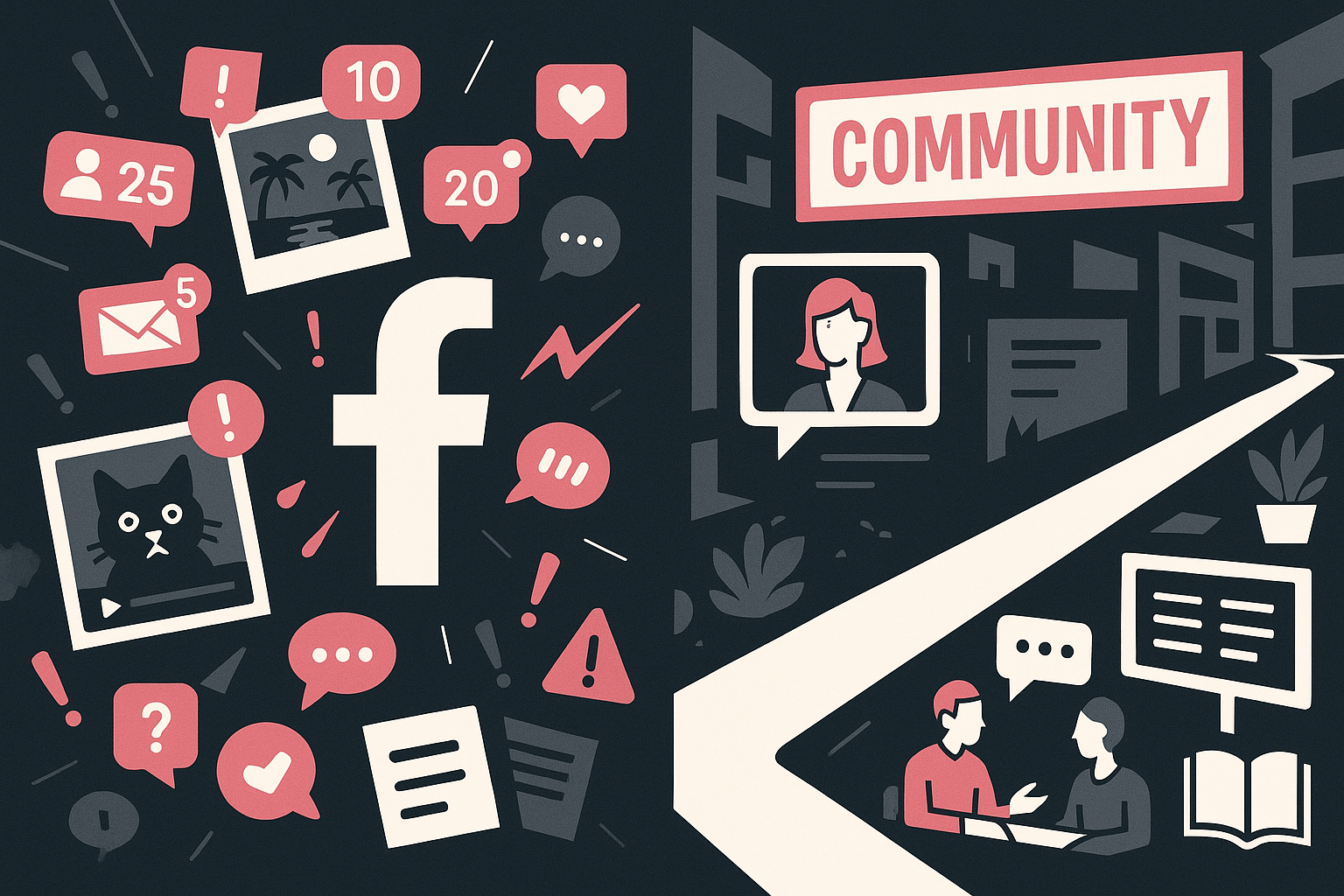
Facebook’s whole game is about keeping people scrolling. It’s not exactly conducive when you’re aiming to create a focused and structured community space.
Your thoughtful posts get lost among holiday snaps, heated debates, and endless cat clips. Even if people head straight to your group, they’re bombarded with notifications from all corners of Facebook. This distraction isn’t by accident—it’s how Facebook operates.
Reflect on how often you’ve missed important posts or got diverted in a Facebook group. It’s tough keeping your audience on track in that environment, isn’t it?
Building on Shaky Ground
Here’s the kicker—you’re not really the owner here. Facebook holds the reins on your community, content, and even member information.
Getting email addresses out? Tricky. Algorithm shifts hiding your posts? A constant worry. Your well-crafted branding? Dominated by Facebook’s interface.
This setup means you’re building on shifting sands, with changes hitting out of the blue. One thriving group can be deserted the next day because of an update.
And then there’s the challenge of getting paid. Facebook’s monetisation options are clunky at best:
- Payment links that disrupt the community vibe
- Manual checks driving potential members away
- Limited integration with your business tools
- No straightforward way to manage payments for subscriptions
Trying to make money through Facebook puts up needless barriers between you and your members.
The Jumbled Content Dilemma
Ever tried to arrange a learning programme in a Facebook Group? Posts get buried down the feed, the search tool is basic, and forming any kind of order is an uphill battle.
Your top content—the stuff that really makes a difference—gets lost in chatter. The way groups are set up means important teachings are hard for newcomers to find.
And then there’s data ownership. You can’t easily see who’s engaged or how your content’s performing. These insights are crucial for tweaking your offers and boosting conversions.
Comparing Facebook to platforms designed for community businesses really highlights its limitations. While it’s free, the hidden toll it takes on your growth can be hefty.
Here’s the bright side: other platforms offer the structure and control you need. Platforms like Skool were created to tackle these very hurdles for creators and coaches.
If you’re fed up trying to grow your business within Facebook’s confines, it could be time to check out options that are better suited for what you’re doing. Your community deserves more than being sidelined in an ad-driven space.
Skool’s New £9/Month Plan: Built for Low-Ticket, Laser-Focused Communities
Finding the perfect free community platform? It’s often a bit of a trade-off. Facebook Groups? Sure, you gain reach but lose control. Discord? Flexibility is great, but it can feel a bit all over the place. That’s exactly where Skool steps in with its nifty £9/month plan. It’s truly changing the game for creators with smaller offers.
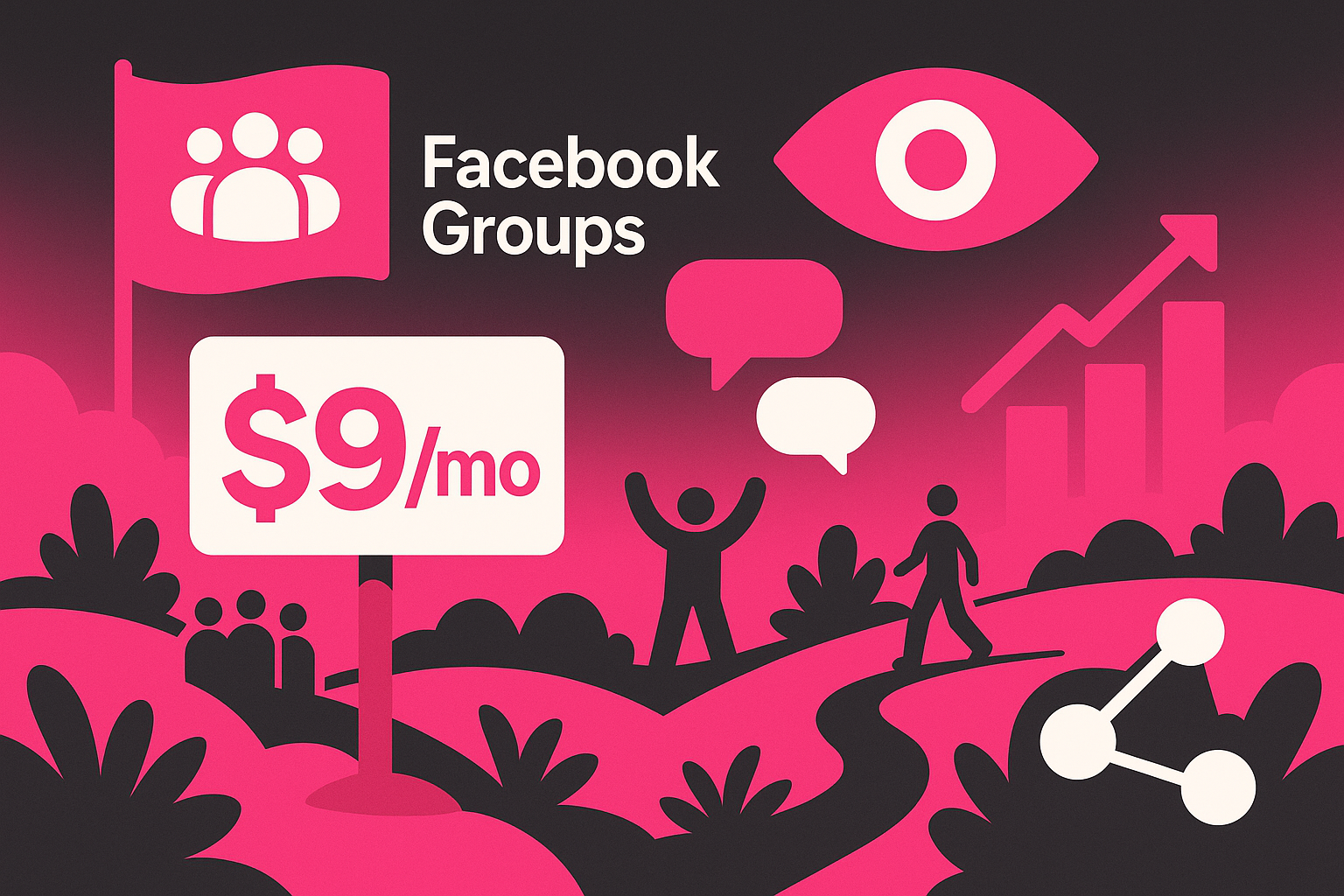
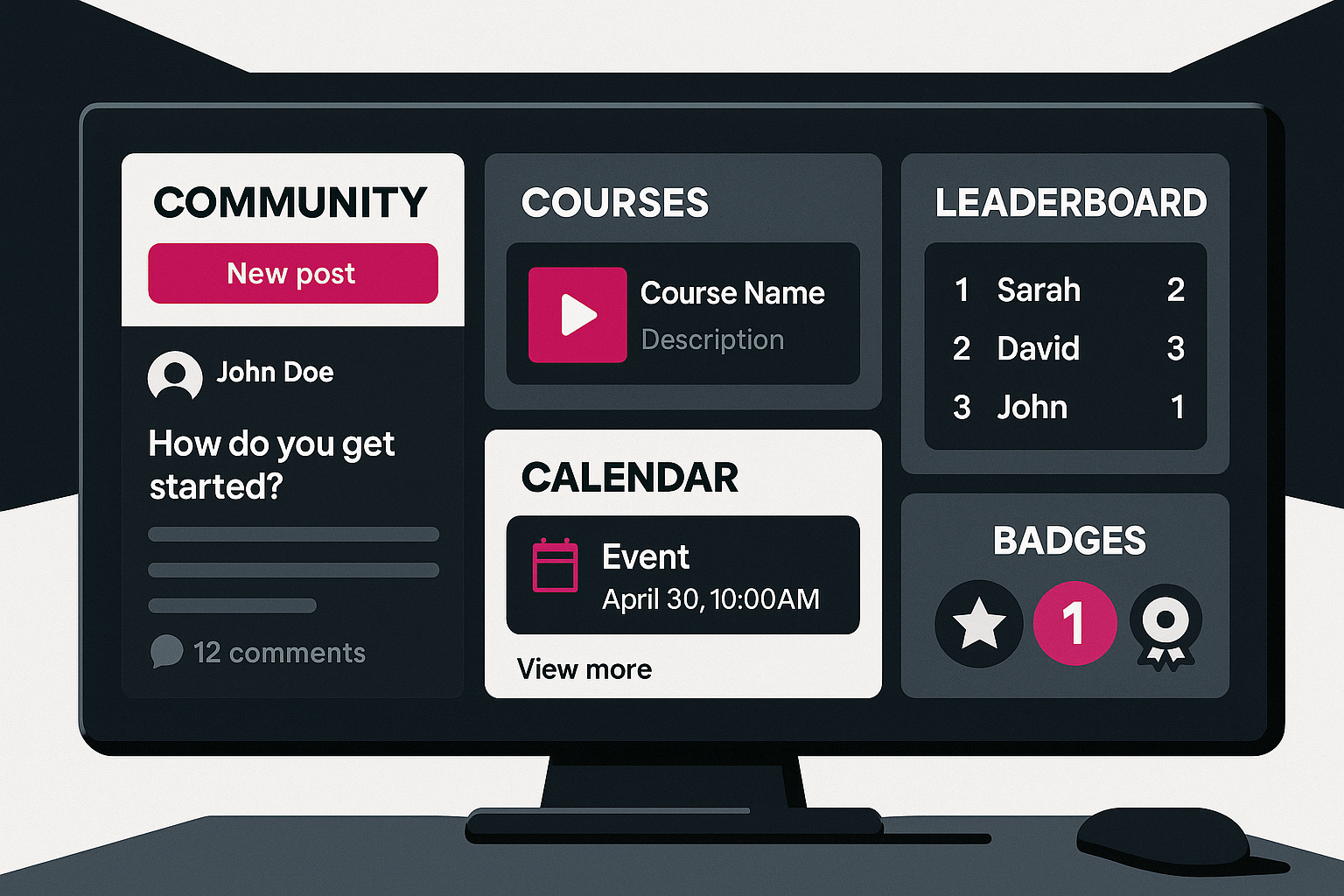
Imagine consolidating what usually takes three or four different tools into one — all for less than two coffees a month. You’ve got your community feed, course content, event scheduling, and payment processing all neatly wrapped up under one roof. No fuss, no mess.
What’s clever here? Skool sits perfectly between freebie platforms and those £50+ per month giants. It’s the ultimate starting point for creators looking to monetise their efforts without diving in fully just yet.
Moving Beyond Facebook Groups with Purposeful Engagement
Let’s face it, Facebook Groups might be free, but they’re a real pain. Algorithms change like the weather, notifications are hit-and-miss, and there are distractions everywhere.
Skool does things differently. No mercurial algorithm messing with your reach, no content battles, and no pointless notifications. Just gamification that fosters genuine learning. Think leaderboards and badges that incentivise real involvement — asking thoughtful questions, helping each other out, and completing course material.
For low-ticket communities, maintaining that vibrant atmosphere between live sessions can be challenging. But these interactive nudges can transform “just looking” into full-on participation.
Their learning features really pack a punch for the price. You can:
- Lay out content paths to guide your members
- Host live sessions directly on the platform
- Drip feed content at your own pace
- Track completion rates and engagement that genuinely matters
When you stack Skool against Facebook Groups, the difference is crystal clear. One’s all about ad views, while the other focuses on nurturing authentic communities.
At just £9 a month, Skool fits perfectly. It’s simple enough for testing the waters, yet structured enough to be taken seriously. Brilliant for those of you with digital products, group coaching on a budget, or workshop series.
If you’re ready to move beyond the limits of a free Facebook Group, Skool could be your next logical step. It transforms that free audience into a paying, engaged community without the hefty price tag associated with enterprise tools.
What I love is how seamlessly this aligns with the journey many creators are on. Start free, build your base, test with a lower-priced offer, and then grow. Skool positions itself right where you need more organisation but aren’t quite ready for a big tech spend.
Ready to give your community the space it needs? Try Skool’s £9 plan and see how a purpose-built platform can elevate your low-ticket offers.
When (and Why) to Shift from Free to Paid Platforms
Picking a free community platform for your expanding audience isn’t just about the bells and whistles; it’s all about timing. Many creators find it tricky to pinpoint the moment to transition from laid-back groups to something more focused. But don’t worry, the shift doesn’t have to be complex or pricey.
Let’s dive into that key moment when free platforms start holding you back instead of boosting your growth. Your place in your creator journey will guide this decision.
Stick with Free While You Experiment
If you’re just dipping your toes in or gathering your first community, Facebook groups are spot on. They’re free, reach folks where they already spend their time, and provide quick feedback on what clicks.
With no financial strain, you can play around. Adjust your messaging, try different content styles, and measure interest without tying up resources in a dedicated platform.
Your budding community doesn’t have to set up new accounts or grapple with unfamiliar interfaces. Facebook’s familiar setup helps smooth the path for newcomers – a significant plus when you’re just starting to prove your idea.
Yet, what if that free option starts feeling more like a hurdle than a springboard? Keep an eye out for these red flags:
- Your engagement feels all over the place
- Members struggle to find past chats or resources
- Your sales process seems weak – lots of chatter but not many conversions
- You’re set to offer something structured but missing the right space
- Members grumble about notifications or platform limits
These hiccups mean it might be time to shift to something sharper and more functional.
When weighing up Skool versus Facebook groups, it’s not just about the features – it’s about the goal. Facebook is designed for scrolling and ads, while dedicated community platforms are built for real connection and conversion.
You don’t need a big budget for the switch. Skool has nailed this transition with a £9/month option, alleviating the big leap of faith many creators worry about.
This budget-friendly choice means you can shift to a dedicated space without starting from scratch or breaking the bank. You can test out a more polished setup while sticking to sensible overheads.
Imagine it: for less than a couple of posh coffees a month, you turn your casual chat group into a proper base where real conversions happen.
The great thing about this plan is that it grows with you. As you move from free content creator to paid coach or course creator, your community space evolves with you.
Platforms like Skool are worth the spend because they convert fleeting likes into lasting progress. Members can follow structured paths, track wins, and connect in a more thoughtful way.
Your posts don’t vanish into endless social feeds; they become searchable, organised content that keeps serving you long after posting.
Moving from free to paid is less about features and more about honing your focus. Purpose-built platforms allow your community to thrive beyond basic engagement.
Thinking of creating a space that truly matters for your community? Skool’s budget-friendly tier lets you enhance your community experience without stretching your budget. Give it a try and see how a focused platform can turn engagement into real outcomes.
The Bottom Line: Start Simple, Upgrade When You’re Ready to Earn
Let’s have a chat about what free community platforms can actually do for you. Facebook Groups are great for getting your feet wet – everyone knows them, they’re easy to use, and most of your audience is already there. They’re brilliant for testing ideas and gathering those first followers.
But here’s the bit that often gets overlooked: free platforms serve as launchpads. They’re not where you settle in for the long haul. When you’re aiming to make money and truly tailor your community, you need something designed for the big leagues.
That’s where Skool comes into play. It’s not just another platform floating around; it’s crafted to turn your engagement into tangible earnings. While Facebook keeps your people distracted with ads, Skool maintains a sharp focus on your content, your offers, and your community.
The Journey from Free to Paid
See your free platform as an experimental space, perfect for trying out ideas, building those first connections, and really understanding what your people want. Facebook Groups are ideal for that early stage, without spending a dime.
But free platforms only take you so far. They’re not yours to control completely. You can’t:
- Sort members by what they’ve purchased before
- Offer premium content in tiers
- Host courses directly within your community
- Avoid the frustrating algorithm that blocks your posts
- Establish roots on a platform that isn’t yours
The silver lining? Upgrading to the right tools doesn’t have to break the bank. Skool’s pricing changes things up – starting at just £9 a month for the first 100 members.
This makes it easier to decide when to make the jump. Even charging a small fee for your community, a member or two could easily cover your costs.
Plenty of creators blend both during the transition. They keep their Facebook group active while moving paying members and key content to Skool. It’s a smooth path for your most invested followers.
You don’t have to rush the shift. Test the waters with a paid challenge or a mini-course on Skool while your main group remains on Facebook. Experience the benefits before fully diving in.
What’s great about Skool? It seamlessly merges community, courses, and commerce. No need for your members to juggle different logins or sites.
Compare Skool to Facebook and think ahead. Facebook offers reach but less control. Skool might not provide as much initial reach, but it allows total control over the experience – crucial when people start paying.
For many, it’s about realizing what’s slipping through the cracks without the right tools to nurture, sell, and keep your community thriving.
If your free community’s buzzing with 50+ active members, you’re sharing valuable insights, and people are eager for more – it’s time for a platform built for earning. The low cost of Skool makes it a no-brainer, even if you’re just beginning to explore revenue options.
Give your community the home it deserves. Try Skool for your next paid venture and see how using the right tools changes the game for you and your members.
Sources:
“The Creator Economy: Entering Its Professional Era” (Goldman Sachs Research, 2024)

