
Behind-the-Scenes Posts That Actually Build Client Trust
I notice a lot of pressure to document every corner of life online to look authentic. It often feels pointless. Most of it adds noise, not trust. Behind-the-scenes content goes wrong when it turns performative instead of useful. What actually works is simpler. I share less, but I share the right things. The things that show how I think, what I value, and how I work.
This article strips the topic back to what matters. I walk through the kind of behind-the-scenes content that builds real trust with potential clients, and the stuff I think you can stop doing. I focus on selective transparency. Enough to be credible and human. Not so much that it drains your energy or blurs your boundaries. I think that balance matters more than most advice admits.
Key Takeaways
- Focus on sharing decision-making moments rather than aesthetics; people trust your thinking more than a perfectly styled desk.
- Choose selective transparency over performative vulnerability by sharing insights that help your audience understand you, not content that looks like validation-seeking.
- Share from the scar, not the wound; processed experiences tend to build more trust than real-time emotional processing.
- Behind-the-scenes content works as a quiet filter, attracting clients who value your approach while steering others away.
- Start with simple, repeatable formats that feel natural to you; authenticity does not require polish, just showing up consistently.
If you keep reading, I show how to turn behind-the-scenes content from random glimpses into something more deliberate. Not louder. Just more useful.
What’s Worth Sharing (And What’s Not) Behind the Scenes
Behind-the-scenes content that actually builds trust isn’t about documenting your entire existence online. It’s about choosing what to show. Little glimpses that help potential clients understand how you think, what you care about, and whether working with you would feel… good. Or at least sensible.
The Art of Selective Transparency
Think of behind-the-scenes as selective transparency, not performative vulnerability. There’s a big gap between sharing everything and sharing what matters. Most people do not need to see your breakfast or your commute. They just don’t. Unless there’s a clear link back to how you work or what you believe in.
The strongest behind-the-scenes content usually shows your decision-making. I think this is where trust actually gets built. When people can see how you think through problems, they feel safer hiring you than if you just show them shiny finished work.
When you’re deciding what’s worth sharing for authentic marketing for coaches and creatives, look here:
- Decision points where your values guided your choices
- Boundaries you set that show professional integrity
- Projects you chose not to take because they weren’t a fit
- How you handled challenging client situations with care
- Learning moments that shaped how you now work
- The thinking behind changes to pricing or process
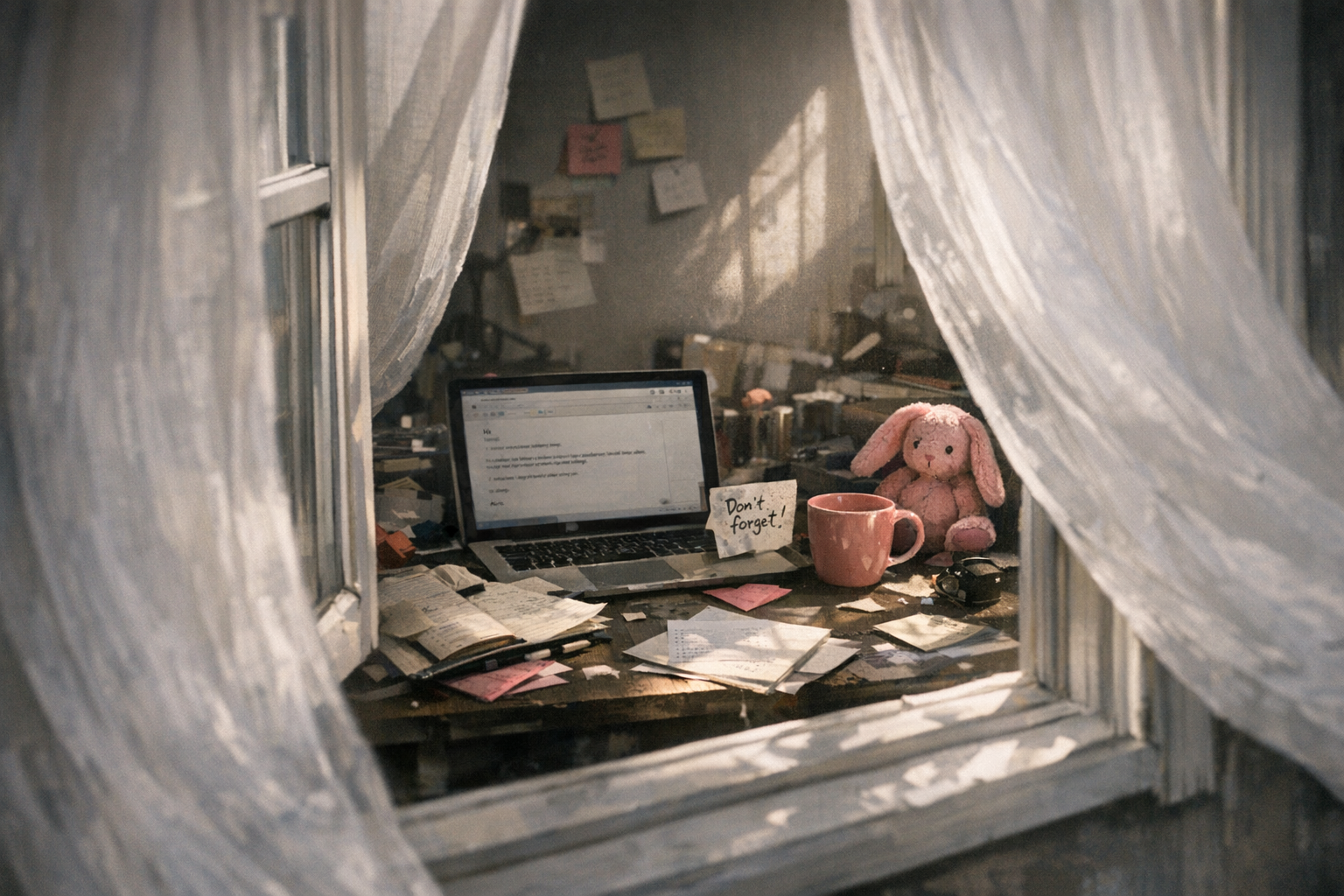
That coffee cup flat lay? Probably a no. Unless it somehow explains something specific about how you work. The beautifully styled desk? Only useful if there’s a real link between how it’s set up and how you support clients.
When “Messy” Builds Trust
Behind-the-scenes for client connection doesn’t mean looking chaotic or amateur. It means looking human. There’s real strength in showing how you navigate tricky moments. When people see how you handle problems, they feel more confident you can handle theirs too.
The vulnerability that actually works isn’t about unloading personal struggles. It’s about being honest about your professional journey in ways that show growth and competence. Using vulnerability to attract dream clients works best when it’s in service of their understanding, not your own processing.
How to be more relatable in your business often comes down to explaining your thinking. Why you made a recommendation. Why you changed direction. How you troubleshoot when something doesn’t quite land. That’s where trust starts to form.
So, what happened this week that revealed something real about how you work? There’s probably at least one moment where a decision reflected your values. Share that instead of posting something random. This kind of behind-the-scenes content won’t just keep you visible — it builds the kind of trust that quietly turns followers into clients.

The Real Reason This Builds Trust (And Who It Scares Off)
Behind-the-scenes content that actually builds trust isn’t about showing your desk plant or your colour-coded notebooks. It does something much more useful than that. It quietly filters your audience. Properly. It pulls in people who get how you think and how you work, and nudges away the ones who don’t. No drama. Just clarity.
When you show up with intentional vulnerability — not a diary entry, not a breakdown, just real transparency — you signal two things at once: safety and leadership. You’re not guessing. You’re steady enough in your process to show the structure underneath the results. That’s not weakness. That’s confidence.
The Filtering Power of Authenticity
People don’t trust polish. They trust people. And it often feels like we all know that, yet still default to pretending we’re frictionless machines who never pause or rethink anything. The moments that stick aren’t the perfect shots. They’re the bits where you explain how you think, or how you handle a wobble, or why you do something a certain way.
When you show how you actually work — kids popping into Zoom calls, energy dipping thanks to chronic illness, or choosing deep work over being endlessly available — you let potential clients sort themselves out. Some will feel relief. Some won’t. That’s the point.
This isn’t about being liked by everyone. That’s exhausting, and honestly a waste of time. It’s about being trusted by the people who respect how you operate.
What You Might Stop Hiding
The behind-the-scenes content that works best usually touches the things many people in your industry avoid talking about:
- Your unique approach to problems
- How you handle challenges or mistakes
- The real timeline of project development
- The thinking behind your pricing or processes
- The boundaries that protect your best work
Being more relatable doesn’t mean diluting your expertise. It means placing that expertise in the real world, where humans live and work.
Because here’s the thing. Behind-the-scenes content is a brand filter whether you mean it to be or not. When someone sees how you work and still wants to go ahead, they’re already on board. They’re not just buying the outcome; they’re buying the process.
So maybe ask yourself what you’re still hiding that would actually make the right people trust you faster. I’m not sure there’s always an immediate answer. But when it clicks, it doesn’t just shift your content. It changes the entire client experience.

You Don’t Need to “Build in Public” to Show You’re Real
Creating behind-the-scenes content that actually builds trust doesn’t require narrating your entire life online. The whole build in public thing can be useful, sure. But it’s not the only way to feel real or credible. And it’s definitely not a requirement.
What matters more is letting people see chosen moments where your values and how you think are visible. Little windows into your work. Often that’s enough. Honestly, it can land better than a full running commentary of your business at all.
Choose Your Behind-the-Scenes Format
The best behind-the-scenes content usually feels pretty normal to make. Like it fits how you already communicate, rather than asking you to become someone else online. These formats are low-effort, low-drama, and they do the job:
- A quick talking-head Reel where you explain why you made a decision
- An email sharing a mistake and what you took from it
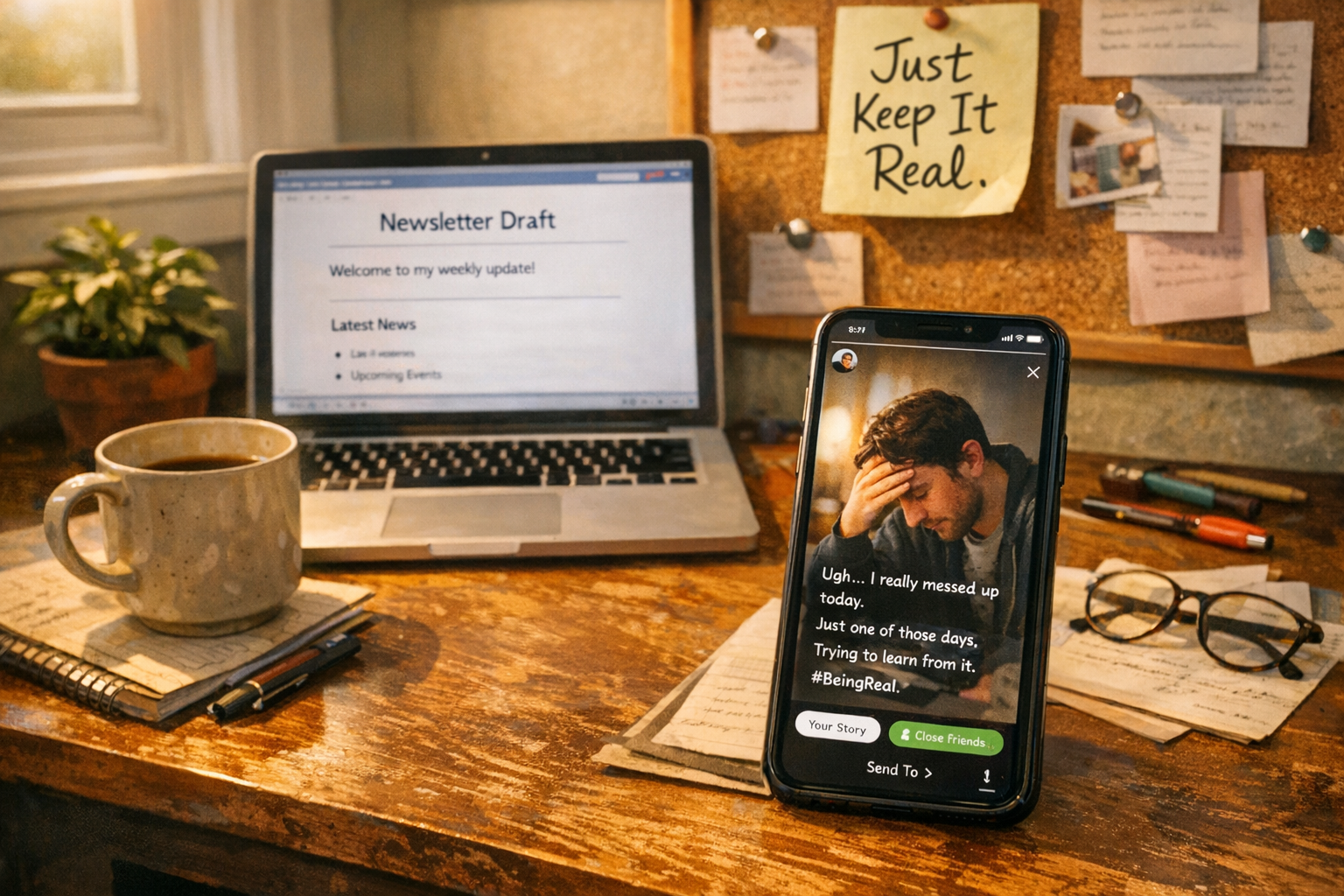
- An Instagram Story showing how you dealt with a sudden schedule change
- A LinkedIn post laying out the questions you ask yourself before starting a project
- A voice note in your Instagram DMs replying to someone in real time
The thing that builds trust isn’t polish. It’s presence. And presence doesn’t need ring lights or a content team. It can happen in a scrappy five-minute Story just fine.
I think the moments that get the strongest response often come from simply being human while doing the work. Not staging it. Not dressing it up. When what you share lines up with how you naturally talk and think, people feel that.
Behind-the-scenes content works because it removes the performance layer. You’re not trying to be vulnerable for effect. You’re just letting people see how you work, and what you care about, as it’s happening.
So—where do you already feel comfortable showing up? Start there. Share one small behind-the-scenes moment this week and see what shifts. Not in your metrics, necessarily. In the actual conversations you’re having.
How to Share Vulnerability Without Oversharing or Draining Yourself
Sharing behind-the-scenes content that actually builds trust is a balancing act. It’s not about spilling everything or pretending you’ve got it all figured out. I think it’s about being real and protecting your energy at the same time. You’re here to connect, not to emotionally wipe yourself out on the internet.
The Difference Between Vulnerability and Dumping
Vulnerability in marketing is not the same thing as unloading your deepest stuff online. You don’t need to share your raw, unprocessed pain to prove you’re human or credible.
A more useful way to look at it is selective honesty. Parts of your process. Challenges that are no longer live grenades. Lessons you’ve actually landed on. That’s the kind of vulnerability that makes you relatable without pulling your professional footing out from under you.
Share from the Scar, Not the Wound
This bit matters. Share experiences you’ve already worked through, not the ones you’re actively stuck in. The value comes from the reflection, not the chaos. What did you figure out? What shifted? What would you do differently now?
So instead of broadcasting a crisis as it’s happening, wait. Let it settle. Once you’ve got perspective and language around it, then there’s something useful to share. People connect with growth and clarity far more than with real-time spirals, even if it often feels like the opposite online.
Choose Your Vulnerability Boundaries
You get to choose what stays private. Always.
And honestly, vulnerability doesn’t have to be a “big reveal” anyway. Small, human moments go a long way. Saying you forgot something obvious. Talking through how you fixed a mistake. Letting people see how you think.
Those smaller glimpses tend to land because:
- They’re easy to relate to
- They show you can handle challenges without drama
- They signal self-awareness
- They feel natural, not like a performance
The “Still Tender” Test
If the idea of sharing something tightens your chest or makes you feel exposed, it’s probably still a wound. That’s your cue to leave it alone for now. Maybe forever. Both are fine.
But if an experience has clearly shaped how you work, what you value, or how you lead, then it might be worth sharing the lesson, not the emotion. That difference matters. It keeps the focus on what helps the audience, not on you needing space to process.
Storytelling, Not Therapy
Behind-the-scenes content is storytelling with intent. It’s not group counselling.
Every vulnerable moment you share should help someone understand themselves better or understand you better as a business owner they might want to work with. If you’re unsure, a simple question helps: does this serve them, or does it mainly serve my need to get this out of my head? Viewers can usually feel the difference.
Finding Your Comfort Zone
What feels vulnerable is wildly personal. For some people, an unfiltered desk photo feels like a lot. For others, talking about business missteps feels risky.
Start where you are. There’s no prize for forcing it. The behind-the-scenes posts that actually build trust usually sit just outside your comfort zone. Enough honesty to mean something, not so much that you wish you’d never hit publish.
Perhaps think about one challenge you’ve properly worked through. The kind where you can see the shape of it now. Could sharing that insight help someone feel less alone, or clearer about their next step? That’s usually the right place to start.

What This Looks Like Day-to-Day: Simple Prompts and Ideas
Creating behind-the-scenes posts that actually build client trust doesn’t need a complicated content plan. It’s more basic than that. It’s about letting people see the work as it really is, so they can decide if you’re someone they’d trust with their business. No performance. Just reality, shared clearly.
Reliable Prompts You Can Use Again and Again
You don’t need to think hard every time you post. Honestly. Keep a short list of prompts you can fall back on when your brain’s tired or you can’t be bothered to be clever. These are the ones I come back to because they work without fuss:
- “Here’s what didn’t go to plan — and what I learned”
- “A choice I made this week based on my values”
- “A mistake I corrected and how it changed future work”
- “A myth about this work I’d love to un-teach”
- “A peek at how my process actually unfolds”
Nothing flashy. Just things real people are already thinking about.
Keep It Simple and Real
The behind-the-scenes content that lands best rarely looks polished. It’s often a voice note, a one-take video, or a scrappy text post where you just say the thing. Overthinking drains the life out of it, and people feel that straight away.
And it’s worth saying this: likes don’t matter much here. Comments only matter a bit. What you’re really listening for is resonance. The quiet messages that say, “Oh wow, same,” or “I thought it was just me.” That’s usually when you know it’s working.
Vulnerability, when it comes to marketing, isn’t about creating drama or digging up struggle for attention. It’s more low-key than that. It’s just being honest about your decisions, your process, and how you think about the work while you’re doing it. Nothing manufactured.
So if you want something practical: pick one prompt from the list and post it this week. Don’t tidy it up to death. Don’t wait until it sounds impressive. Just share something real from your working day that might help someone else feel a bit more understood in theirs.

Sources:
“Consumer Content Preferences” (Stackla, 2025)